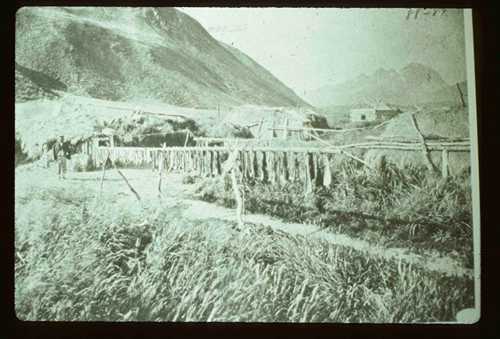
In classical society, Alutiiq families needed dry, secure storage for their supplies. Just like today, caring properly for the abundance of foods harvested in summer helped people feed their families throughout the winter. When food spoiled or was stolen, families could go hungry.
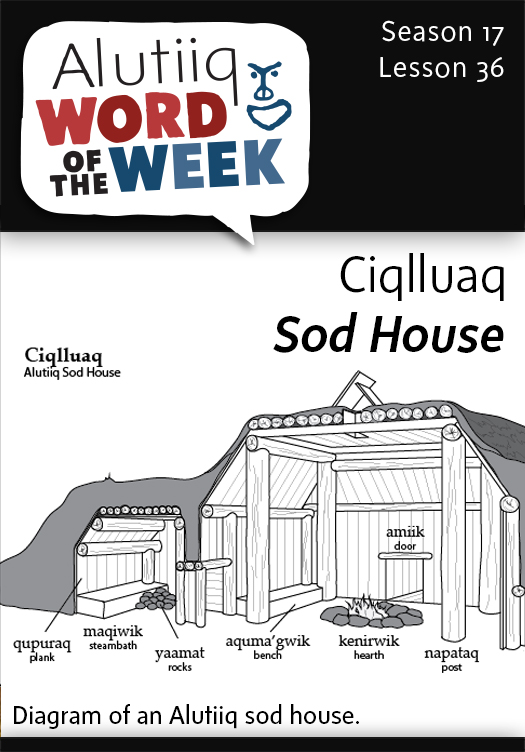
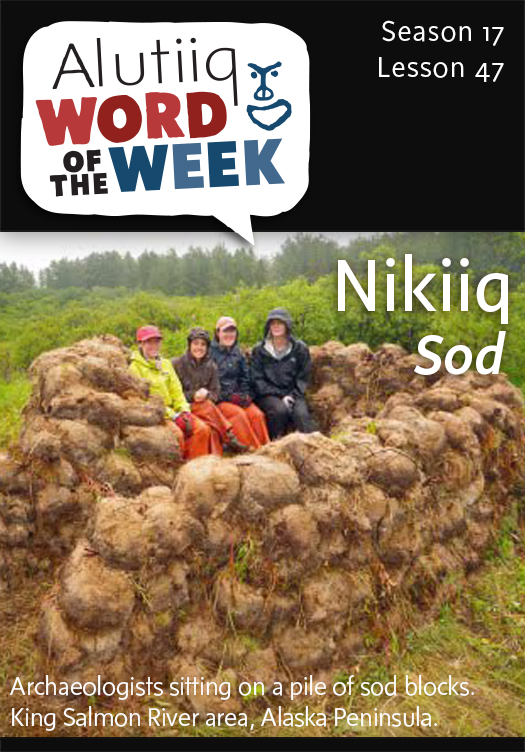
One of the best places to store foods was in the rafters of sod houses. People made the roofs of these structures from carefully carved and fitted planks covered with a thick layer of grass. This method of construction helped the roof shed rain and provided insulation. It also created a sheltered space below the roof. Heat from the household fire warmed the air around the rafters and helped to keep the space dry. Here, people hung seal stomachs filled with oil, berries, lily roots, or clams, tied bundles of herbs, and piled dried fish and meat.
Archaeologists believe that food storage moved from sheds beside family homes into houses about nine hundred years ago. One benefit of hanging food above the kitchen was convenience. Families could access their stores without leaving the house. Perhaps more importantly, people could also safeguard their supplies. Bears and foxes were less likely to break into a home filled with people than an unoccupied shed. Similarly, storing food in your home prevented people from stealing them at a time when the Alutiiq population was growing, and raids were more common.