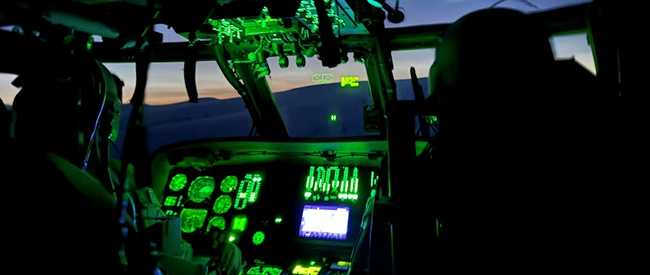
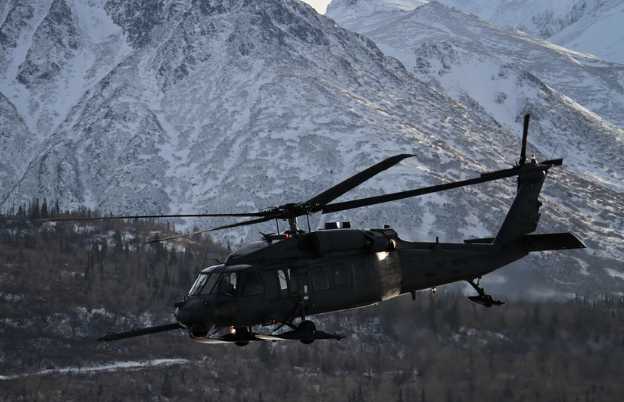
An Alaska Army National Guard aircrew assigned to Bethel conduct a search and rescue mission to locate and extract an overdue snowmachiner during a mission coordinated through the Alaska Rescue Coordination Center in Western Alaska, Feb. 16, 2026. The aircrew searched for approximately three and a half hours, covering more than 100 square miles of terrain before eventually locating the individual about 110 miles north of Bethel, roughly 30 miles east of his last known location. (U.S. Army National Guard photo by Chief Warrant Officer 3 Nick Lime)
JOINT BASE ELMENDORF-RICHARDSON, Alaska – An Alaska Army National Guard aircrew assigned to Bethel conducted a successful search and rescue mission to locate and extract an overdue snowmachiner during a mission coordinated through the Alaska Rescue Coordination Center.
The mission opened Feb. 15 in response to a request for assistance from the Alaska State Troopers to perform a search for an overdue snowmachiner who had been snowmachining north of Pilot Station. The Alaska Army National Guard accepted the mission through AKRCC and launched a UH-60L Black Hawk helicopter from Bethel to search the area.
The aircrew searched for approximately three and a half hours, covering more than 100 square miles of terrain before eventually locating the individual about 110 miles north of Bethel, roughly 30 miles east of his last known location.
One of the aircrew members involved in the mission, Chief Warrant Officer 3 Nick Lime, said the team first located the individual on the evening of Feb. 15 but was unable to immediately extract him due to challenging terrain and fuel limitations.
“We located him that night, and another crew member and I snowshoed about half a mile trying to link up with him,” Lime said. “But with fuel running low and the deep snow conditions, we couldn’t make it all the way in, so we dropped a survival radio and some water to make sure he could stay in contact and had what he needed overnight.”
On the morning of Feb. 16, with a storm approaching, the Army Guard aircrew returned to the area to deliver additional supplies.
“There was a storm coming in, so we flew up to drop supplies,” Lime said. “We were concerned about him being able to hold out in those conditions.”
Using the previously dropped radio, the aircrew re-established communications with the stranded snowmachiner. He had managed to free his snowmachine but reported that his feet were hurting and freezing.
“We got him to ride it about 100 to 150 yards closer to the trail we had made the night before,” Lime said.
The crew then dropped a set of snowshoes to help him continue moving. When the snowmachine became stuck again, members of the aircrew transitioned to movement on foot.
“Once on the ground, I snowshoed another quarter mile to him,” Lime said. “I was able to link up with him and walk him back to the hawk.”
As Lime made his way toward the stranded snowmachiner, the Black Hawk pilots remained in radio communication with the individual, encouraging him to keep moving and continue working his way closer to the aircraft.
After reaching the aircraft, the crew brought the individual aboard and transported him to a medical facility in Bethel for evaluation.
The mission highlights the close coordination between the Alaska State Troopers, the Alaska Rescue Coordination Center, and the Alaska Army National Guard, as well as the aircrew’s ability to adapt to rapidly changing conditions in remote winter terrain.