Mpox Confirmed in the Municipality of Anchorage What Alaska Clinicians Should Know
By Health Alaska.gov on Comments Off on Mpox Confirmed in the Municipality of Anchorage What Alaska Clinicians Should Know
A case of clade II mpox (monkeypox) infection was confirmed in an adult Anchorage resident with recent out of state travel, where ongoing mpox activity has been reported. The patient was unvaccinated and reported anonymous sexual contact while traveling, 8–10 days prior to rash onset. The illness has been mild; the patient is isolating and recovering at home. Close contacts have been identified and are undergoing notification, risk assessment, and symptom monitoring. No additional cases or evidence of local community transmission have been identified at this time. This HAN serves as a reminder for clinicians to remain vigilant for mpox and to follow appropriate infection control and reporting procedures.
Transmission: close physical contact with lesions, body fluids, scabs, prolonged face-to-face respiratory exposure, or contaminated materials; rarely from infected animals
• Incubation period: typically 3–17 days
• Initial symptoms: fever, chills, fatigue, headache, myalgias, lymphadenopathy (often a distinguishing feature); some patients present with rash only
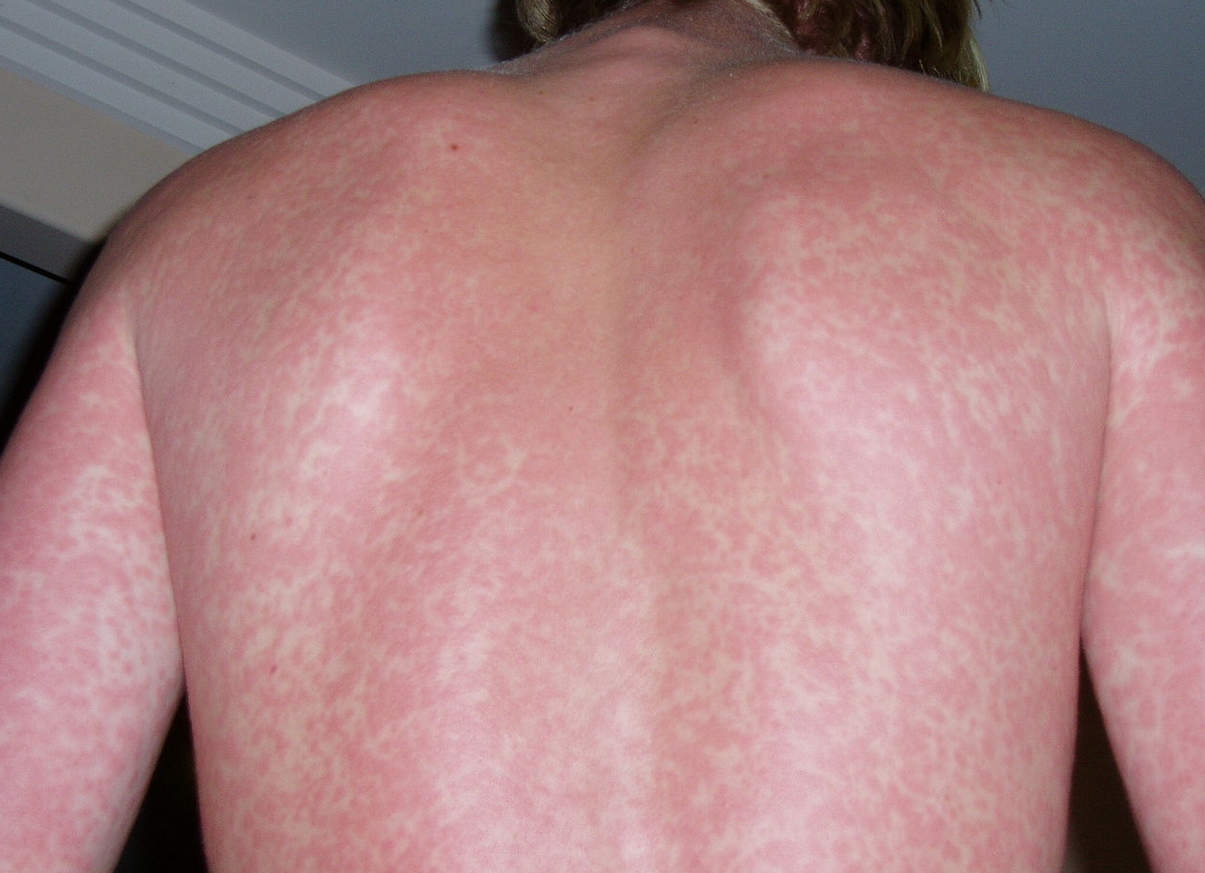
• Rash progression: Macules → papules → vesicles → pustules → scabs o Lesions are firm, deep-seated, well-circumscribed, often umbilicated and tender o Common sites: genital area, hands, feet, face, chest (localized or disseminated)
• Infectious period: Begins at symptom onset, is highest during rash phase, and ends after all lesions have scabbed, fallen off, and new skin has formed (often 2–4 weeks)
• Epidemiologic risk factors include close contact with a confirmed or probable mpox case, skinto-skin contact within networks experiencing mpox activity (e.g., MSM), and exposure to imported animals or animal-derived products from endemic regions.
TESTING Test any patient with a compatible rash, regardless of travel or sexual history. Mpox may resemble syphilis, herpes, or varicella and should be included in the differential for unexplained vesiculopustular or ulcerative lesions. There is no validated test for asymptomatic individuals or those without active lesions.
SPECIMEN COLLECTION Testing is available through the Alaska State Public Health Laboratory and select commercial labs. Specimen requirements may vary. For example, some labs only accept dry swabs—confirm with the testing lab first.
Collection guidance:
• Collect two swabs per lesion from 2–3 lesions, ideally from different sites
• Vigorously swab lesions using sterile synthetic swabs
• Use sterile containers (avoid glass)
• Refrigerate (2–8°C) or freeze (≤-20°C)
• For public health testing, complete this test request form and specify pathogen “MPOX” under Biothreat and Emerging Pathogens
REPORTING, ISOLATION, AND INFECTION CONTROL Clinicians should immediately report suspected mpox cases to the Alaska Section of Epidemiology (SOE) at: 907-269-8000 during business hours or 1-800-478-0084 after hours. When reporting, please submit this reporting form and also provide :
While awaiting results, patients should remain home, avoid close contact, keep lesions covered, avoid sharing items, and clean contaminated materials
• Full isolation is required if systemic symptoms (fever/respiratory) are present
• Once systemic symptoms resolve, isolation is not required if all lesions are fully covered and a well-fitting mask is worn, but close physical/sexual contact should still be avoided until lesions heal completely
TREATMENT
• Currently, there is no FDA-approved treatment specifically for mpox
• Most patients recover with supportive care (pain control, hydration, wound care)
• Patients who are severely immunocompromised or at risk for severe or prolonged disease mpox may be eligible for treatment with available therapeutics, following interim clinical guidance developed by the CDC.
VACCINATION
Post-Exposure Prophylaxis:
• JYNNEOS recommended for high-risk close contacts
• Ideally administered within 4–14 days of exposure
Pre-Exposure Prophylaxis is recommended for ≥18 years who meet the following criteria:
• Gay, bisexual, and other men who have sex with men
• Transgender or nonbinary individuals with recent STI or multiple/anonymous partners
• Travelers to areas with Clade I transmission (e.g., Central/East Africa)
• Healthcare workers with occupational Orthopoxvirus exposure
• Individuals who self-identify as being at increased risk