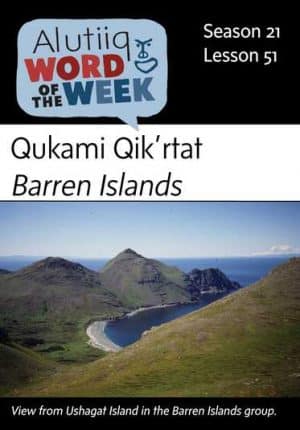
Qukami Qik’rtat—Barren Islands Qukami Qik’rtat carwartuu’utaartut.—The Barren Islands have strong rip tides. The Barren Islands are a mountainous cluster of islands at the far northern end of the Kodiak Archipelago. These six small pieces of land cover just 318 acres, and Include Ushagat, West Amatuli, East Amatuli, Nord, Sud, and Sugarloaf. The largest, Ushagat, […]
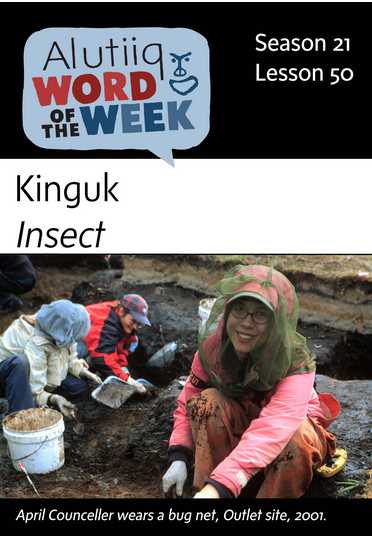
Kinguk—Insect Kingut ilait kumsugnartaartut.—Some insects are ugly. Mosquitoes, black flies, white socks, no-see-ums, and other biting insects are an inescapable part of summer in the Gulf of Alaska. Hatched during the warming days of May, they thrive until the heavy frosts of fall. Anyone who has worked outdoors on a still day knows the […]
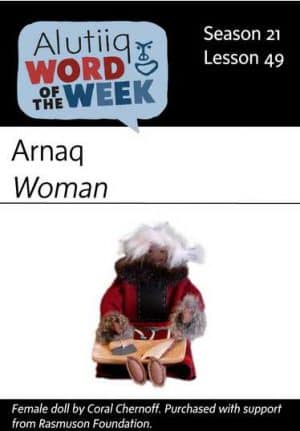
Arnaq—Woman Arnat peknartutaartut.—Women work hard. Women had important economic, social, and spiritual roles in classical Alutiiq society. In addition to collecting plant foods, they processed fish for storage, tanned hides, sewed the skin coverings for kayaks, wove baskets, and manufactured clothing. In winter villages, groups of related women lived together in large sod houses with […]
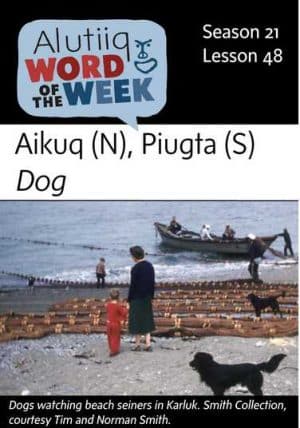
Aikuq (N), Piugta (S)—Dog April mal’ugnek piugtengq’rtuq.—April has two dogs. Archaeological sites in Alaska illustrate that dogs (Canis familiaris) have been a part of Native communities for at least two thousand years, although the presence of dogs in Siberia eleven thousand years ago suggests that it may be much longer. On Kodiak, dog bones illustrate […]