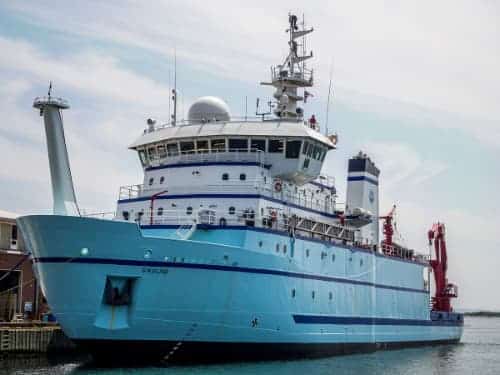
[dropcap]M[/dropcap]aking the Arctic accessible for excellent science EU funds an Arctic Research Icebreaker Consortium, which will provide researchers with improved access to research icebreakers. Fourteen partners from thirteen countries including two North American partners from USA and Canada have joint forces to improve the capacities for marine-based research in the ice-covered Arctic Ocean. In the […]
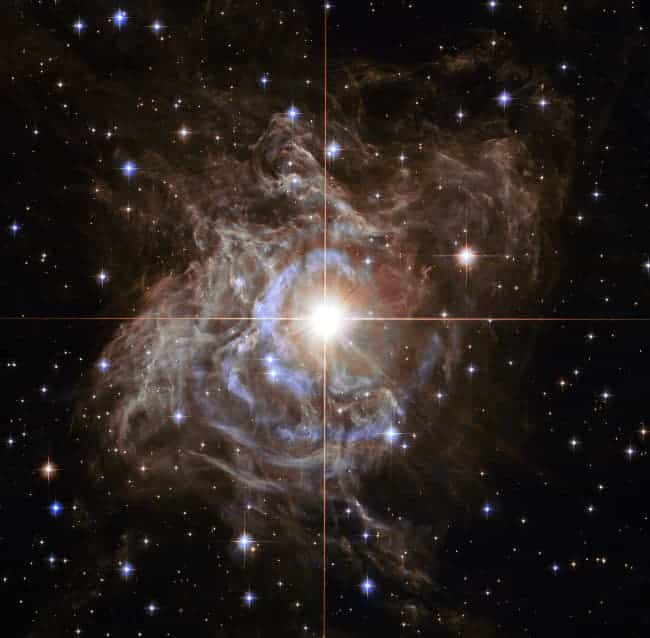
This festive NASA Hubble Space Telescope image resembles a holiday wreath made of sparkling lights. The bright southern hemisphere star RS Puppis, at the center of the image, is swaddled in a gossamer cocoon of reflective dust illuminated by the glittering star. The super star is ten times more massive than the Sun and 200 […]
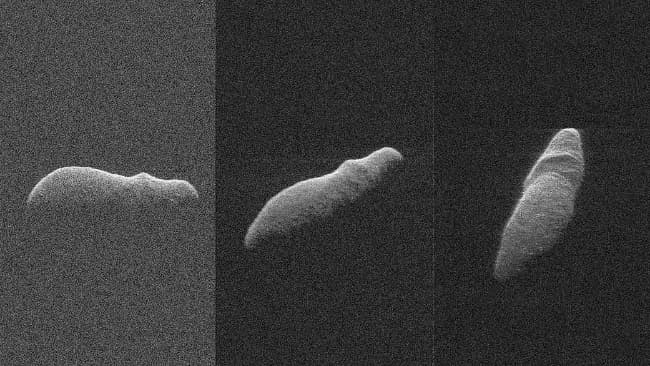
The December 2018 close approach by the large, near-Earth asteroid 2003 SD220 has provided astronomers an outstanding opportunity to obtain detailed radar images of the surface and shape of the object and to improve the understanding of its orbit. The asteroid will fly safely past Earth on Saturday, Dec. 22, at a distance of about […]
As the brilliant comet 46P/Wirtanen streaked across the sky, NASA telescopes caught it on camera from multiple angles. NASA’s Hubble Space Telescope photographed comet 46P/Wirtanen on Dec. 13, when the comet was 7.4 million miles (12 million kilometers) from Earth. In this visible-light image, the comet’s nucleus is hidden in the center of a fuzzy […]