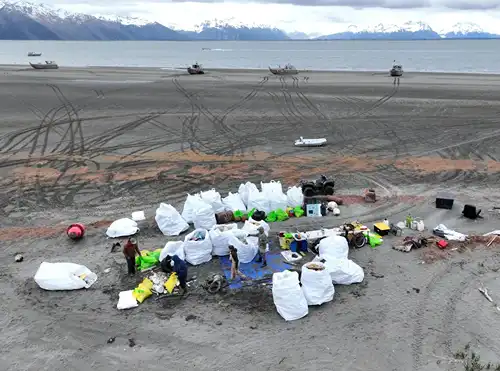
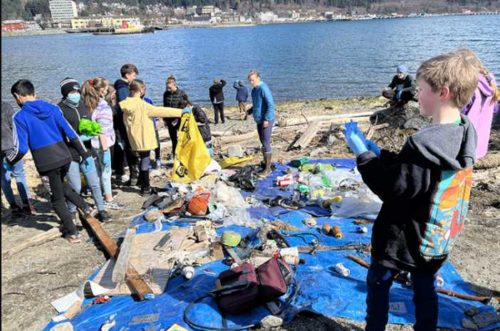
Collected debris sits organized on the beach. Photo courtesy Matt Widmann.
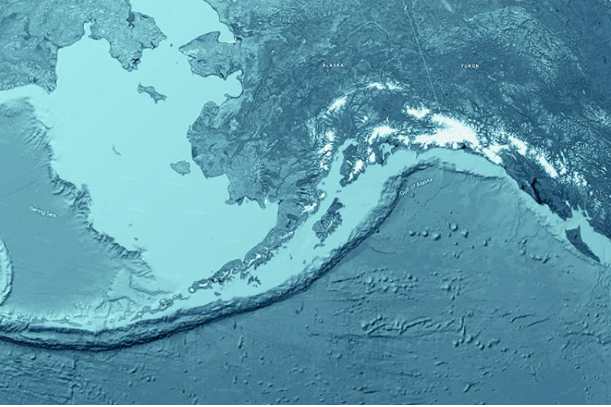
The Copper River Delta hosts some of the most valuable fisheries in Alaska. However, the region lies at the edge of the Gulf of Alaska, where currents bring a seemingly endless supply of plastic, foam and other marine debris.
In May 2025, a team led by Nelly Hand of the small fishing business Drifters Fish spent two days clearing debris from Egg Island, the largest island in the Copper River Delta. The effort, which was supported by Alaska Sea Grant’s Alaska Center for Marine Debris, collected an impressive 5,500 pounds of trash, including Styrofoam, plastic bottles, old fishing gear and miscellaneous plastic fragments.
“It was eye-opening for all of us to see the accumulation of debris,” Hand said. “It’s something we’ve always been aware of, but the amount on the barrier islands was a big surprise.”
This debris directly impacts wildlife of the delta and the people that rely on Copper River fisheries for subsistence and livelihoods. Copper River sockeye and Chinook salmon are among the most prized in the world, and other culturally and nutritionally valuable fisheries like eulachon and trout rely on the delta. In addition, over 12 million migrating and nesting birds utilize the highly productive wetlands of the delta every year as a safe harbor and a crucial refueling opportunity. The density of litter on the islands often puts birds and other animals in direct contact with plastic. “Sea gull nests and chicks on the island were surrounded by pieces of Styrofoam,” Hand noted. “It was sad to see how much plastic these animals are exposed to.”
To begin the project, Drifters Fish chartered a flight to conduct an aerial survey of the entire island chain. They easily spotted large debris such as floats, refrigerators and small fishing vessels. There were also massive amounts of small debris on the beaches — and even blown into the forest — that the team did not discover until they began the cleanup.
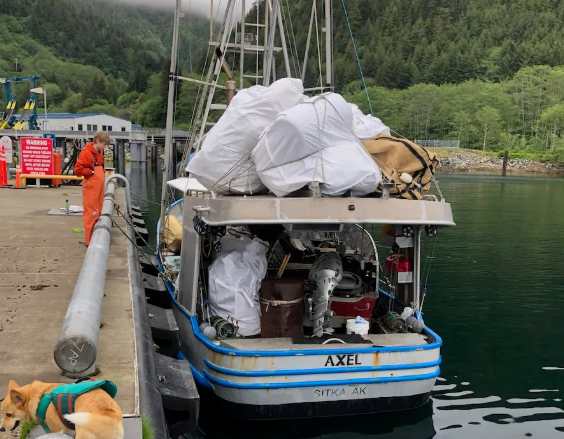
The team used five specialized gillnetting boats that they could beach on the sandy shores of Egg Island. Then they used ATVs to navigate the beaches and haul debris to the boats. The gillnetters shuttled the debris to a large seiner stationed offshore, which in turn brought it back to Cordova for sorting and disposal. A portion of the debris was recycled in collaboration with Nicole Baker of the fishing recycling firm Net Your Problem. Some of the trash served as an educational tool: a local sixth-grade class helped sort a bag of debris and even participated in a neighborhood cleanup.
The project is one of 13 supported in the last two years as part of Alaska Sea Grant’s Community-Led Marine Debris Removal program, funded by the NOAA Marine Debris Program. Hand and Drifters Fish will continue the project next year with another two-day cleanup, this time on the eastern end of the barrier island chain. They will also participate in a new Community-Led Marine Debris Removal project, a collaboration with the Prince William Sound Science Center to develop marine debris educational programs in Cordova. The effort will include cleanups in multiple locations in and around Cordova and will incorporate a group of local artists who will creatively document the work. Collected debris will also be made available for use in artistic and educational projects.
Hand said she plans to have an even bigger team for the next cleanup and will continue spreading awareness about marine debris. She encourages other fishers to take action to prevent and clean up litter in their home waters.
“It was very rewarding to share our success with the community. I hope to inspire other coastal communities to use their fleets and their resources to do these kinds of cleanups too.”