Pioneering new study reveals the deadly impacts of plastic pollution on wildlife populations for the first time
By Natural History Museum Press Office on Comments Off on Pioneering new study reveals the deadly impacts of plastic pollution on wildlife populations for the first time
For the first time, the impacts of plastic pollution have been seen at a population level in wild animals.
Consuming just 0.5 grams of plastic reduces the recruitment of juvenile sable shearwaters by 12%.
Seabird chicks which have been fed more than five grams of plastic will likely die out at sea and never return to their colonies.
Mounting levels of plastic waste in the environment are affecting wildlife populations, new research has revealed.
Every year, around 50 million tonnes of plastic is dumped into the environment. This waste entangles, chokes and poisons wildlife across the world, including sable shearwaters living on the remote Australian island of Lord Howe. After hatching on the island, these birds head out to sea for several years before returning to breed as adults.
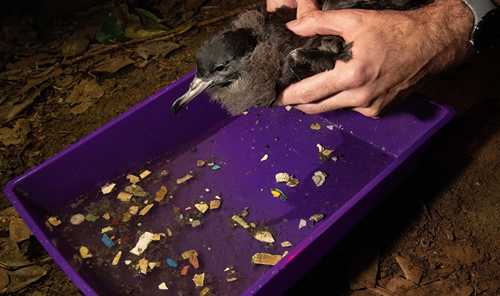
Sable shearwaters have rapidly become some of the most plastic-polluted animals in the world, with parents known to feed their chicks waste after mistaking it for food. The devastating impacts of this mean many chicks experience dementia-like symptoms and suffer from a fibrotic disease known as ‘plasticosis’.
Now, new research has revealed that plastic pollution isn’t just affecting individuals, but the health of the wider population as well. Using 15 years of data, the team were able to link the amount of plastic consumed by sable shearwater as chicks to their likelihood of surviving into adulthood and returning to Lord Howe Island.
Even being fed just 0.5 grams of plastic reduces the chances of a shearwater chick returning to breed by 12%, but as many as a fifth of chicks have at least a gram of plastic or more. The researchers labelled birds with more than two grams of plastic as ‘the walking dead’, as these animals are unlikely to ever make it back home.
At present, the long lives of sable shearwaters mean that the Lord Howe population is currently in a slow decline. However, this could change rapidly as the impacts of plastic pollution catch up with the colony. The researchers have recommended that additional methods beyond fledging success and adult survival are considered when assessing seabird colony health.
Dr Alex Bond, Principal Curator of Birds at the Natural History Museum and a co-author of the study, says: “For a long time, people have said plastic doesn’t cause population change in the wild. That’s simply not true. For the first time, using data from 15 years of research, we’ve been able to show that the more plastic seabirds consume as chicks, the less likely they will be able to return to the colony and have chicks of their own as adults.”
“While we’ve demonstrated this in sable shearwaters, all seabirds are being affected by plastics – we just aren’t studying most of them closely enough to tell. Without immediate action to stem the flow of plastic into our oceans, this is an issue that will only continue to get worse.”