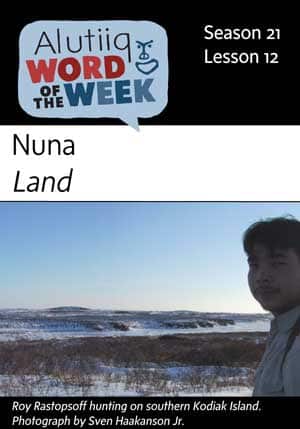
Nuna—Land Man’a nunarpet.—This (here) is our land. The Alutiiq homeland stretches from Prince William Sound almost to the southern tip of the Alaska Peninsula, covering a vast section of the Alaska coast. Archaeologists believe that Alutiiq people have always lived here, because the distribution of prehistoric artifacts across this landscape closely mirrors the distribution of […]
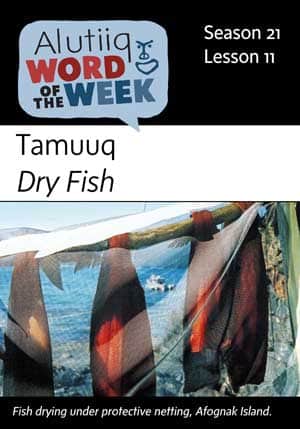
Tamuuq—Dry Fish Tamuuq kinertaa.—The fish is dry. Catching salmon is only the first step in a long process of preserving summer’s abundance for winter use. The real work begins once the fish are in the net. In the past, Alutiiq women used slate knifes, known as ulus, to clean and split fish, which they hung […]
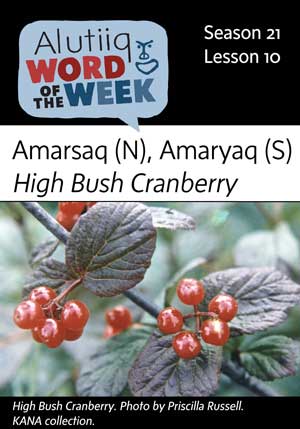
Amarsaq (N), Amaryaq (S)—High Bush Cranberry Amaryat quuhnartaartut.—Highbush cranberries are (always) sour. The highbush cranberry (Viburnum edule), known locally as the bog berry or sour berry, is a large flowering shrub that grows in Kodiak’s thickets and clearings, often in shady spots. This plant, found widely across North America, produces small red berries that dangle […]
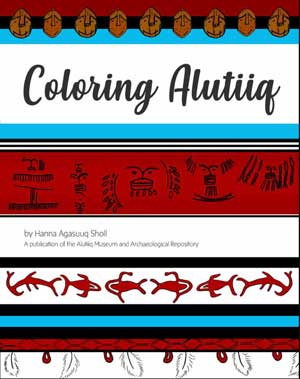
Today, the Alutiiq Museum released Coloring Alutiiq, a twenty-eight-page coloring book by Alutiiq artist Hanna Sholl. The publication features black and white line drawings of traditional Alutiiq clothing opposite the animals and tools used in their manufacture. A ground squirrel appears beside a squirrel skin parka. A caribou skin parka appears opposite a caribou and the […]