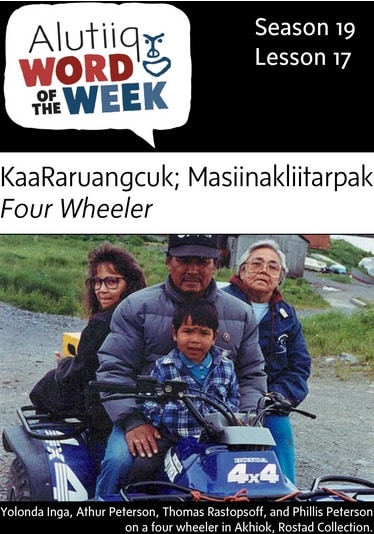
KaaRaruangcuk; Masiinakliitarpak – Four Wheeler Village-ni kaaRaruangcut amlertaartut. – There are a lot of four wheelers in the villages. Four-wheelers are the small, open, all-terrain vehicles (ATVs) that provide transportation in Kodiak’s Alutiiq communities. Because it is both difficult and expensive to ship a full-sized car or truck to a remote village, many residents choose […]
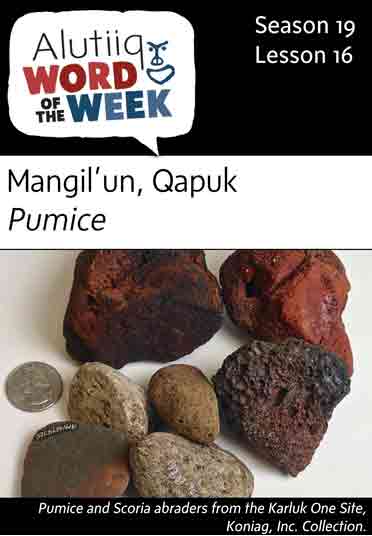
Mangil’un, Qapuk – Pumice Allrani iwaiyaqa qapuk qutmi, kesiin miktaartuq. – Sometimes I find pumice on the beach, but it is always small. Pumice is a type of volcanic glass. This gritty, light-colored igneous rock forms during volcanic eruptions, as water mixes with molten lava. The water turns to steam and creates a light-weight, frothy […]
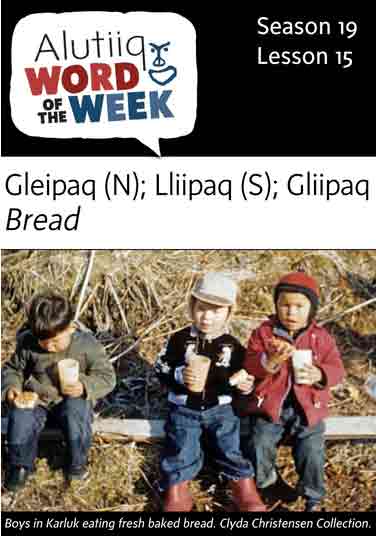
Gleipaq (N); Lliipaq (S); Gliipaq – Bread Gelipalikutartua. – I am going to make bread. Bread came to Kodiak with Russian traders, who imported flour and knowledge of baking. Yet baked goods appear to have been a luxury item in the early historic era. Historic accounts suggest that bread was in short supply, due to […]
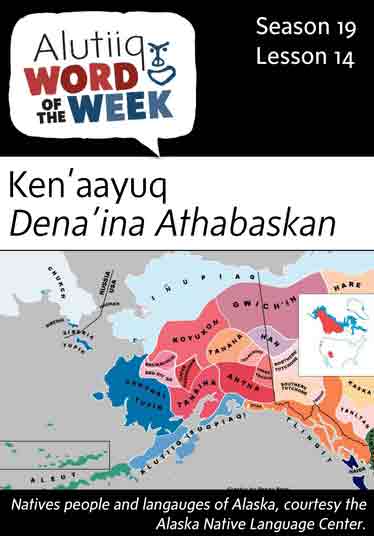
Ken’aayuq – Dena’ina Athabaskan Anaanarpet Ken’aayuq. – Our aunt is a Dena’ina Athabaskan. The Dena’ina are one of eleven Athabaskan Indian groups in Alaska. Their homeland includes the shores of Cook Inlet, interior regions of the Kenai Peninsula and the northern Alaska Peninsula, and the Matanuska and Susitna river valleys. The term Dena’ina means “the […]