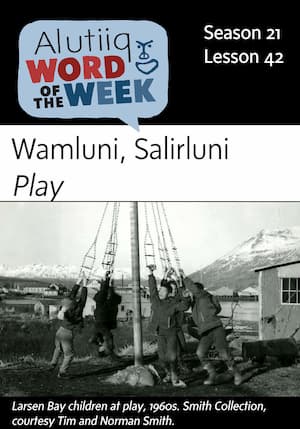
esson 2142 Wamluni, Salirluni—Play Wamqutartut.—They are going to play. Education in Alutiiq communities focused on training children the essential skills of adult life. Young people learned these skills by listening to stories and legends, helping their Elders, and imitating adult activities with toys. Archaeological sites in the Kodiak Archipelago have produced many miniature items—tiny duplicates […]
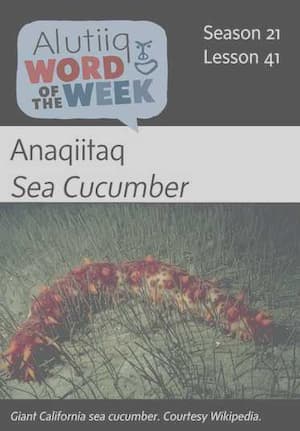
Anaqiitaq—Sea Cucumber Allrani guangkuta nertaartukut anaqiitanek.—Sometimes we eat sea cucumbers. The sea cucumber is an echinoderm, a creature related to sea urchins and sea stars. There are many varieties of sea cucumbers found in Alaska waters, from intertidal areas to the edge of the continental shelf. Sea cucumbers are known for their ability to expel […]
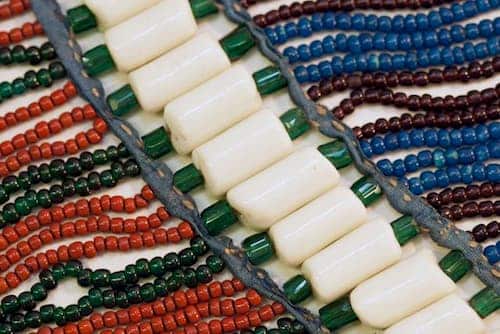
With a $74,000 contract from the US Bureau of Indian Affairs, the Alutiiq Museum and the Sun’aq Tribe of Kodiak will partner on the Pinguat (Beads) Project—a two-year effort to study and teach Alutiiq beading. The project, which begins this month, will center around the study and replication of historic, beaded regalia currently on […]
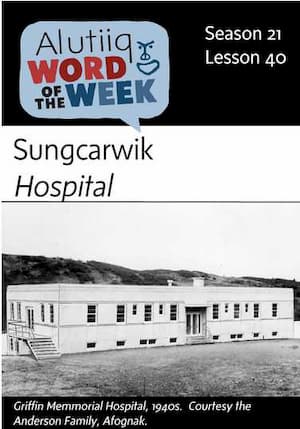
Sungcarwik—Hospital TuugtaRaq sungarwigmen ag’uq.—The doctor is going to the hospital. Medical care in Alutiiq communities was once provided by two types of specialists: healers who treated the sick with heat, herbal medicine, and bloodletting, and shamans who realigning the ill with the spirit world. When new diseases arrived in Alaska with Russian traders, medical care […]