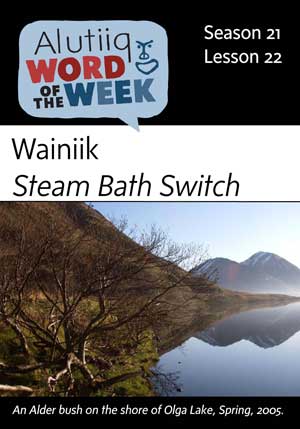
Wainiik—Steam Bath Switch Taaringa wainiimek.—Switch me with the steam batch switch. Switching is a common practice in Alutiiq steam baths. In the soothing, wet heat, people slap themselves with flexible branches to promote good health. This practice improves circulation, relieves aches and pains, and can be used to treat illness and prepare a pregnant woman […]
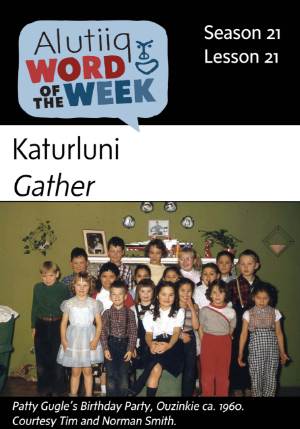
Katurluni—Gather Katurtut.—They are gathered. Winter is the Alutiiq social season. Each year as the land freezes and darkness creeps across the sky, people set aside their subsistence gear to focus on household chores and socializing. In classical Alutiiq society, people gathered to sew parkas, mend tools, play games, and prepare for festivals inside houses warmed […]
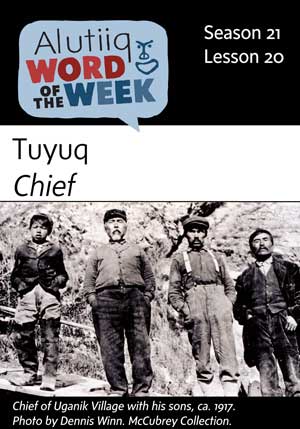
Tuyuq—Chief Tuyuq ap’sgu.—Ask the chief. Classical Alutiiq society had three social classes: wealthy people, commoners, and slaves. Social positions were inherited and permanent. One’s status did not usually change during life. Alutiiq chiefs were members of the elite. They were individuals born to rich families who demonstrated their leadership abilities through generosity, bravery, and the […]
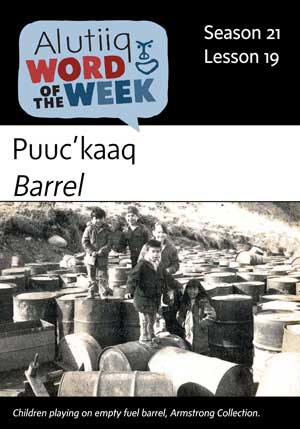
Puuc’kaaq—Barrel Puuc’kaat saRayami et’ut.— The barrels are in the shed. The Alutiiq word for barrel—puuc’kaaq—comes from the Russian word bochka, also meaning barrel. This link reflects the use of barrels for bulk storage on sailing ships in the early historic era. Russian traders imported grain, beads, and many other commodities to Alaska in wood barrels. […]