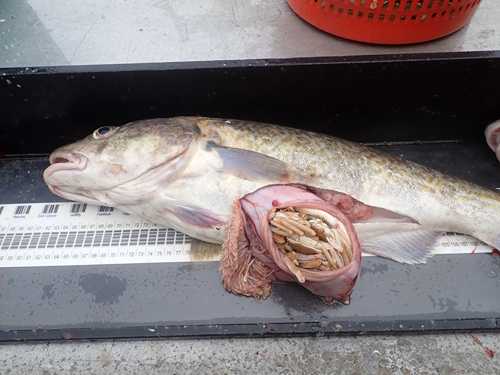
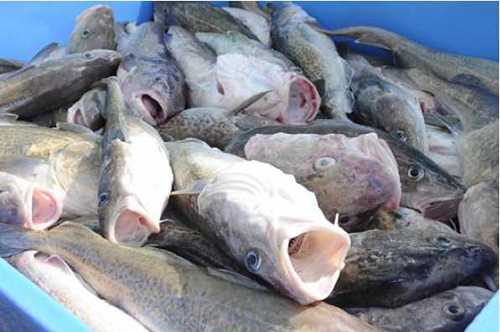
A new study uses spatial models to precisely map how Pacific cod prey on commercially important snow and southern Tanner crabs in the eastern Bering Sea. A new study by NOAA Alaska Fisheries Science Center biologists illuminates predator-prey dynamics between Pacific cod and commercially important snow and Tanner crabs. Scientists examined diet data collected […]
The Aleutian Islands Subdistrict state-waters Pacific cod fishery management plan allows harvest limits and exclusivity to be removed any time after March 15, if it is determined the guideline harvest level (GHL) will not be caught before December 31, 2025. Current harvest data indicates regulation changes are warranted to provide for maximum fishing opportunity. […]
Scientists explored the effectiveness of shore-based observers in place of at-sea observers in a high-volume trawl fishery. They also developed a structured approach to evaluate shoreside monitoring programs in fisheries that lack at-sea human observers. NOAA Fisheries is required by law to monitor fishery catches to ensure sustainable management of U.S. fisheries. The Alaska pollock […]
Advancements in Artificial Intelligence forms such as computer vision, machine learning, and deep learning assist with processing data. The model was highly accurate at detecting pollock and salmon. Scientists used a model to detect and classify fish in videos more quickly than humans. The detection model is called You Only Look Once, version 11 (or […]