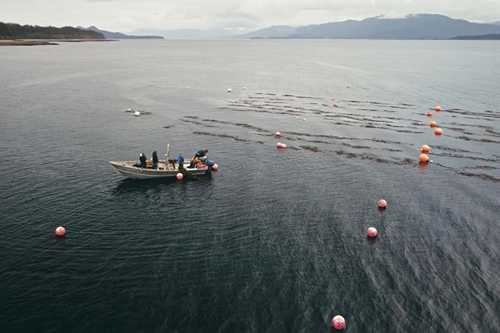
Scientists teamed up to investigate how kelp farms may provide novel habitat for fish and invertebrate species. Marine aquaculture, or mariculture, provides economic opportunities for coastal communities in Alaska through farming shellfish and seaweed. NOAA Fisheries continues to support Alaska’s growing aquaculture industry through policy and permitting—providing access to resources and research. A recent study […]
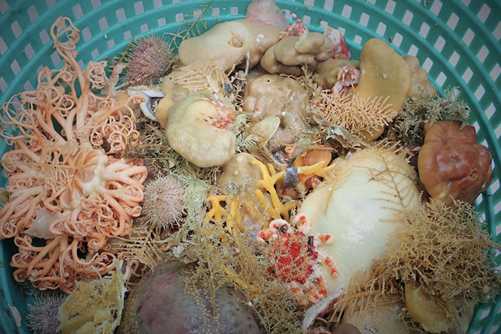
One sponge species is so unique that scientists created an entirely new genus to classify it. Another represents a group never seen before outside of the tropics. Scientists have discovered nine new species of sponges in the Gulf of Alaska and Aleutian Islands. The specimens were collected during the Alaska Fisheries Science Center’s long-standing annual bottom […]
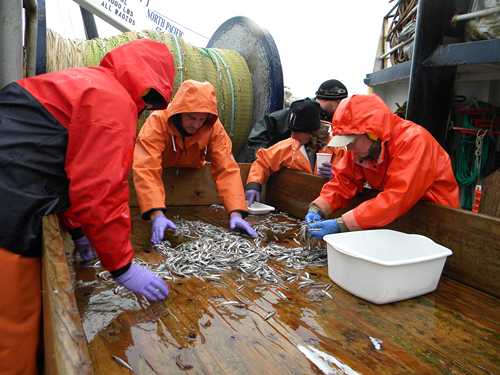
Pacific capelin are a major forage species for predators in the North Pacific. They are short-lived and, like salmon, were thought to spawn only once and die. A new study found that some are capable of spawning multiple times. For certain fish species, like Pacific salmon, reproduction is a once-in-a-lifetime event, known as semelparity. Many other […]
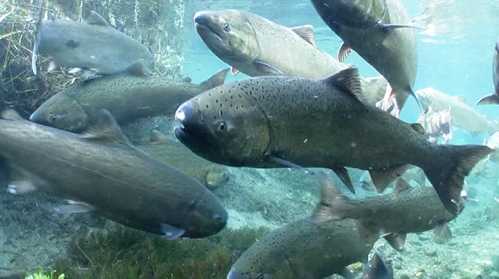
NOAA scientists pinpoint increased juvenile-to-adult mortality connected to recent heatwaves as a major factor in recent Chinook salmon declines on the Yukon River. Yukon River Chinook salmon have been declining for decades. These declines have limited salmon harvest and posed hardships for local communities that depend on these fish for their food sovereignty, culture, […]