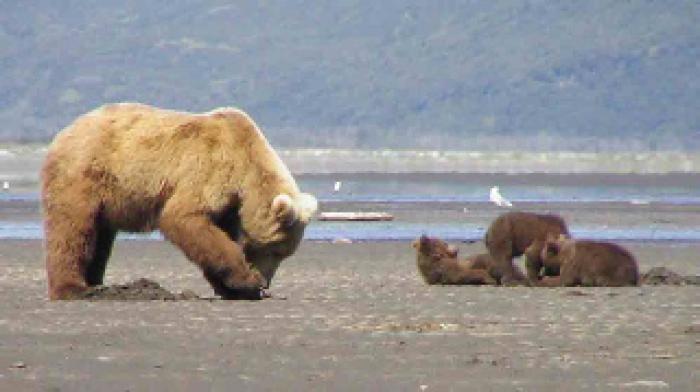
Bear — Taquka’aq Taquka’at yugnitaaraat, “Suk.”, Taquka’at niugnitaaraat, “Suk.” – Bears always say “Person.” The brown or grizzly bear (Ursus arctos) is the largest terrestrial mammal in North America. The Kodiak Archipelago is home to more than three thousand of these enormous creatures, which have long been a source of food and raw materials for […]
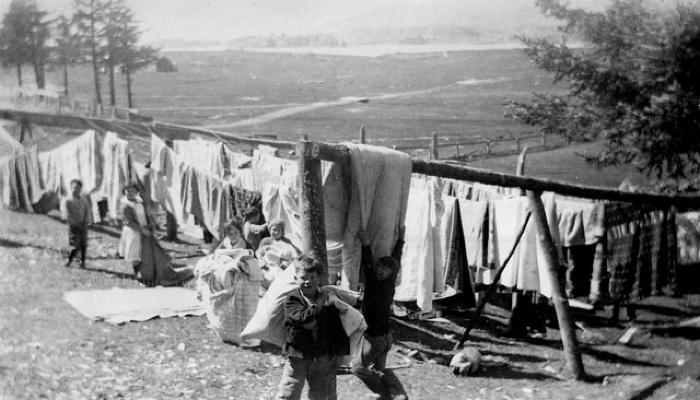
Laundry — Iqaiyat Nukallpiat iqaiyaneq pingaktaan’tat. – Men don’t like to do laundry. The Alutiiq word for laundry comes from the word for dirt, iqaq, and literally means “dirties.” Anyone with a family knows that laundry is a never-ending chore, but in the days before modern washers and dryers, it was an exhausting, daylong project. Alutiiq […]
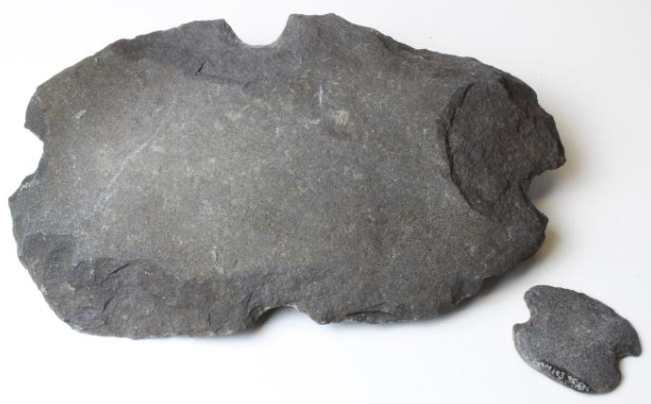
Anchor — Kicaq Kicaq agtunartuq. – The anchor is heavy. Before the availability of metal tools, Alutiiq people fashioned anchors from large cobbles. Craftsmen selected a relatively flat, rectangular rock and shaped it by chipping. A stone anchor found in Karluk is 10 inches long and weighs about six pounds. The edges of the stone were […]
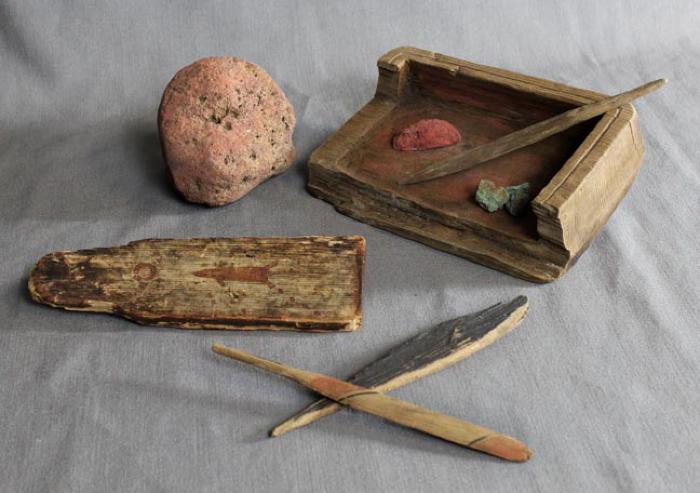
Paint, Color — KRaasirluni KRaasiyaqa maaskaaqa. – I am painting my mask. Painted designs are the final artistic touch on many Alutiiq objects. Artisans continue to decorate everything from masks, hunting hats, and paddles to household implements withcolorful geometric designs, animal shapes, and human figurines. In classical Alutiiq society, paint was also applied to the […]