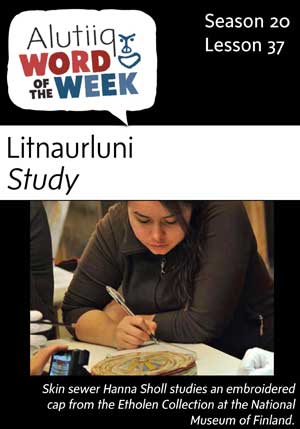
Litnaurluni–Study Litnauryugtuci-qaa?–Do you all want to study? The study of Alutiiq heritage has changed dramatically in the past three centuries. In classical Alutiiq society, children learned the skills of adult life by working with and listening to family members. People with special gifts—artists, healers, shamans, tradition bearers, and politicians—apprenticed to accomplished community members to study […]
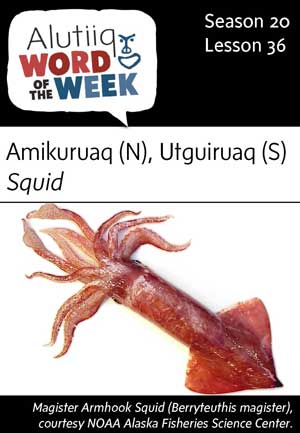
Amikuruaq (N), Utguiruaq (S)–Squid Amikuruanek piturtaartut cali.–Squid are eaten too. Squid, with their streamlined bodies and tentacled appendages, are cephalopods, related to the octopus. They are abundant in the Gulf of Alaska, where more than fifteen species of squid are known to thrive and others have moved north with recent changes in ocean environments. Aggressive […]
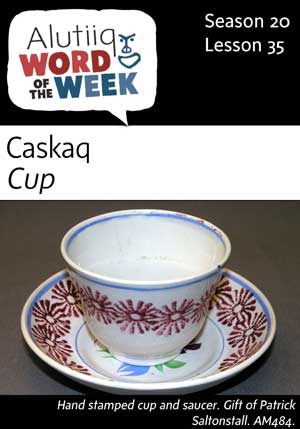
Caskaq–Cup Sarsataartukut caskagunk aturluku.–We drink our tea using a cup. Some historians believe that 1840 was a pivotal moment in Alutiiq history, a point where cultural change accelerated, with major shifts in Kodiak’s social and economic landscape. Devastated by the smallpox epidemic of 1837–1839, Kodiak’s Alutiiq communities reorganized into regional settlements, where survivors began to […]
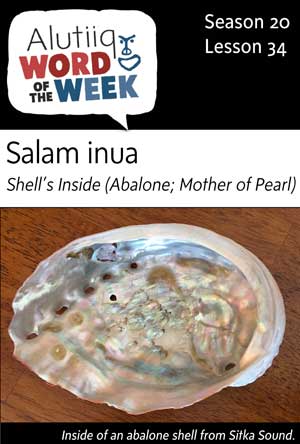
Salam inua–Shell’s Inside (Abalone; Mother of Pearl) Salat inuat rirtut.–Shell insides are shiny. The Pinto Abalone (Haliotis kamtschatkana) is a shallow-water, marine snail. It is one of eight abalone species that inhabit the Pacific coast of North America, and the only abalone that lives in Alaskan waters. It can be found from Alaska’s Yakutat Bay […]