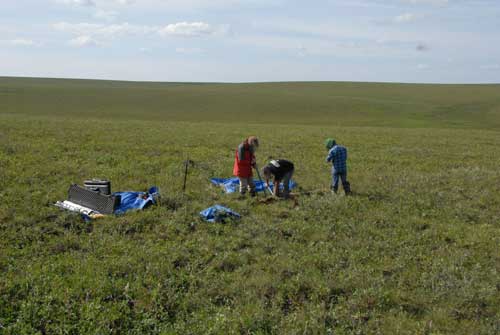
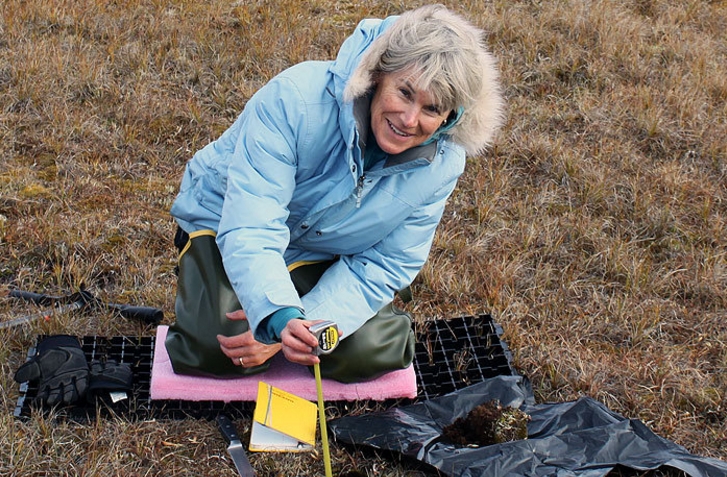
Researchers have discovered that thawing permafrost in the Northern Hemisphere stores twice as much mercury as the rest of the planet’s soils, atmosphere, and oceans. The finding has significant implications for human health and ecosystems worldwide. In a new study, scientists measured mercury concentrations in cores of frozen ground—or permafrost—from Alaska and used the data to […]
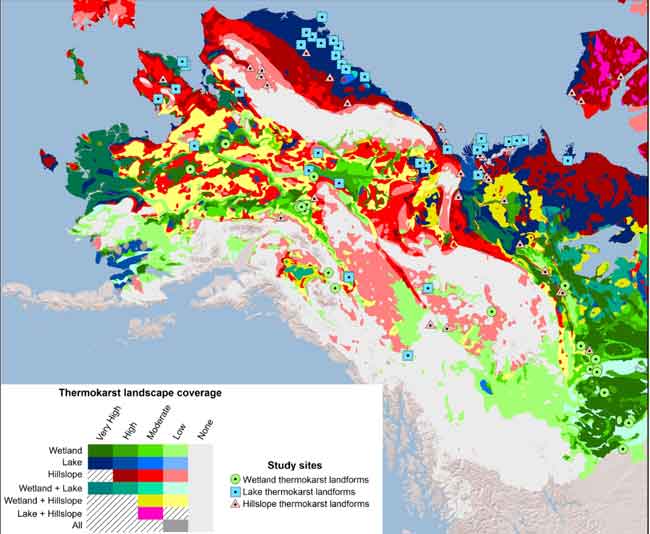
A new mapping project has identified regions worldwide that are most susceptible to dramatic permafrost thaw formations, known as thermokarst, and the resulting release of greenhouse gases. University of Alaska Fairbanks researchers David McGuire and Vladimir Romanovsky were part of the project, which was led by University of Alberta researcher David Olefeldt. They found […]
LOS ALAMOS, N.M.—A new study of permafrost has found that the ice wedges forming the prevalent honeycomb pattern across the tundra appear to be melting rapidly across the Arctic, changing the hydrology of the region and accelerating the release of greenhouse gases with major implications for global warming. While the gradual warming of permafrost has […]
In anticipation of an arctic science conference happening next month in Fairbanks, an editor asked me to write a column on climate change in the north. I told her climate stability would be the bigger story, since basswood trees used to grow in Fairbanks and redwoods once dropped their cones into the Porcupine River. Climate […]