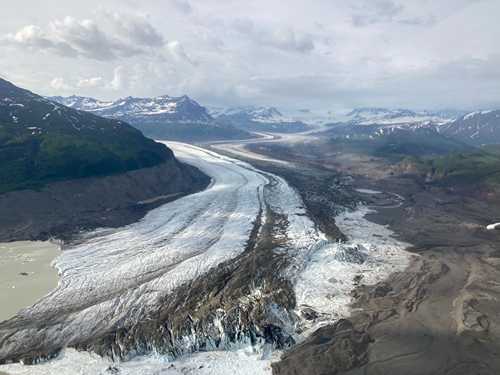
Alaska’s glaciers respond to climate change by melting for three additional weeks with every 1 degree Celsius increase in the average summer temperature, data from satellite-mounted radars show. A single degree Celsius equates to 1.8 degrees Fahrenheit. Work by scientists at Carnegie Mellon University and the University of Alaska Fairbanks also shows that synthetic […]
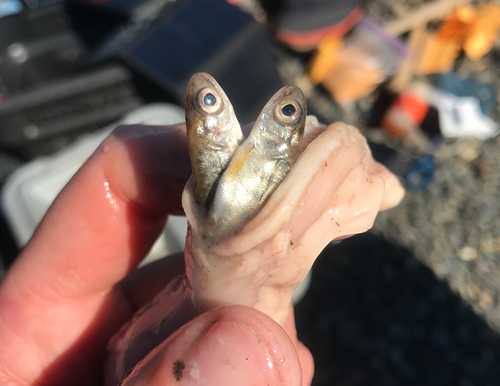
Rising temperatures in a Southcentral Alaska river have led to a hungrier population of invasive northern pike, a trend that could imperil native salmon and other fish species. A University of Alaska Fairbanks-led research team analyzed the stomach contents of northern pike caught by the U.S. Fish and Wildlife Service in the Deshka River […]
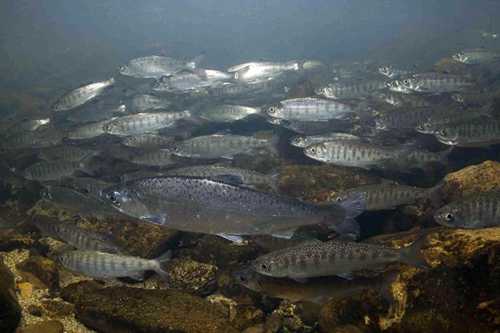
NOAA scientists track growth of heatwaves that can affect fisheries. A massive marine heatwave has dominated waters off the West Coast since last summer. This marks only the third time on record that such a large section of the coastal ocean has remained so warm for so long—particularly into winter months—without it being an […]
[content id=”79272″] Nome was a hot place to be in early July. The temperature was 20 degrees above normal at one point during that period, according to the monthly summary of the Alaska Climate Research Center. The center, part of the University of Alaska Fairbanks, released its July summary earlier this month. Nome, on Alaska’s Seward Peninsula, had a record […]