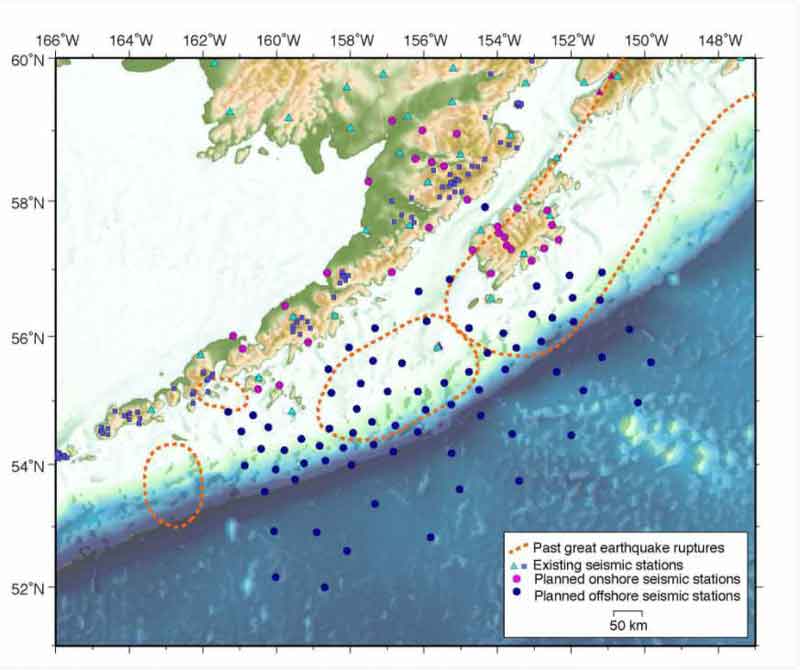
The National Science Foundation is funding the largest marine seismic-monitoring effort yet along the Alaska Peninsula, a region with frequent and diverse earthquake and volcanic activity. Involving aircraft and ships, the new Alaska Amphibious Community Seismic Experiment will be led by Cornell University in Ithaca, New York, with partners at the University of Washington and seven other […]
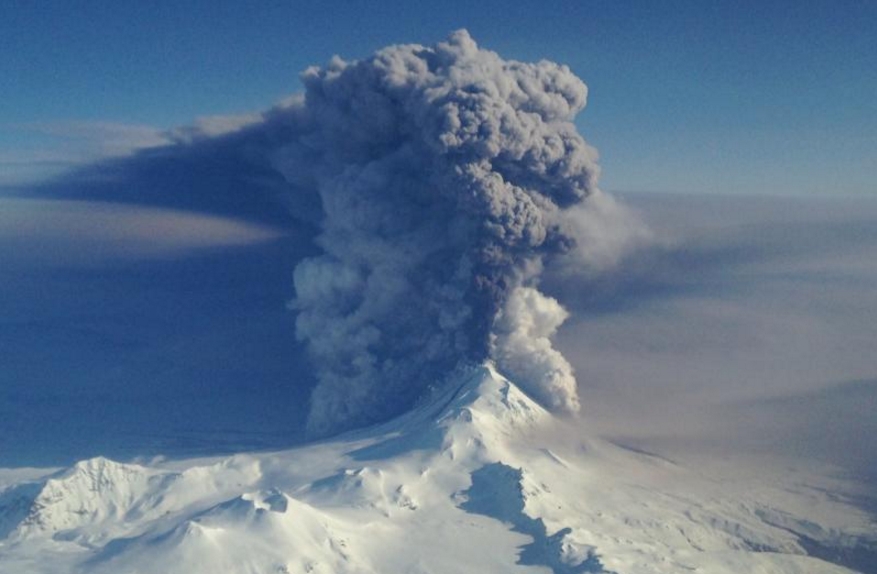
The Alaska Volcano Observatory reported today that the Pavlof Volcano, which erupted abruptly on Sunday afternoon, has now exhibited reduced emissions, and has lessened to the degree that is is now difficult to observe. The Pavlof volcano, situated to the west of the entrance to Pavlof Bay, in the Aleutians, was observed by a […]
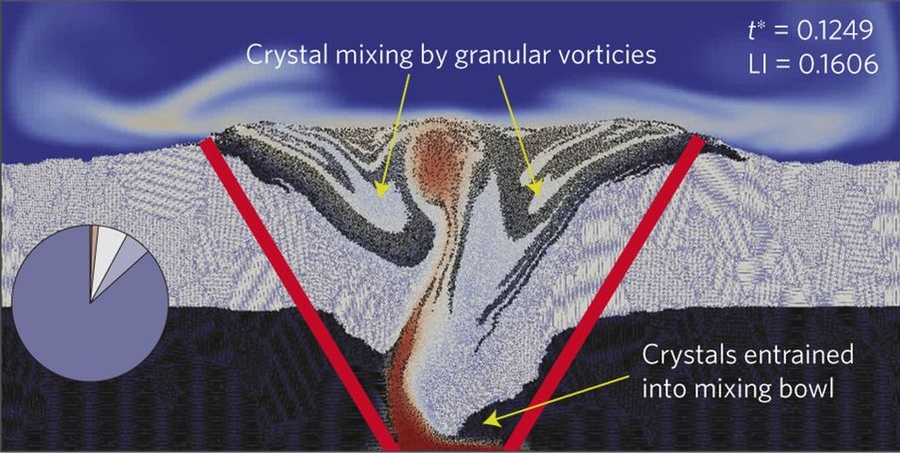
Months of warning signs from Mauna Loa, on Hawaii’s Big Island, prompted the U.S. Geological Survey to recently start releasing weekly updates on activity at the world’s largest active volcano. For now, such warning signs can only rely on external clues, like earthquakes and gas emissions. But a University of Washington simulation has managed to […]
Planets with volcanic activity are considered better candidates for life than worlds without such heated internal goings-on. Now, graduate students at the University of Washington have found a way to detect volcanic activity in the atmospheres of exoplanets, or those outside our solar system, when they transit, or pass in front of their host stars. […]