“By targeting beliefs and protest activity, the directive positions dissent itself as a potential crime,” one news organization said
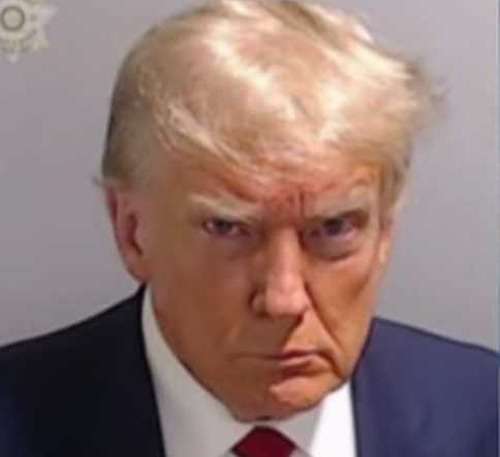
President Trump. Image-State of Georgia
In between his highly publicized designation of Antifa as a domestic terror organization and his indictment of former FBI Director James Comey, US President Donald Trump signed a little-reported national security memorandum that gives law enforcement new tools to target his critics.
Trump signed National Security Presidential Memorandum 7 (NSPM-7) on Thursday. The directive, titled “Countering Domestic Terrorism and Organized Political Violence,” focuses exclusively on “anti-fascist” or left-wing activities, and mandates a “national strategy to investigate and disrupt networks, entities, and organizations that foment political violence so that law enforcement can intervene in criminal conspiracies before they result in violent political acts.”
“I don’t want to sound hyperbolic but the plain truth is that NSPM-7 is a declaration of war on anyone who does not support the Trump administration and its agenda,” journalist Ken Klippenstein wrote in a piece raising alarm about the directive on Saturday.
Klippenstein argued that the memorandum was worrying on several fronts. For one, its focus on preventing crimes before they are committed opens the door to rights violations.
“In other words, they’re targeting pre-crime, to reference Minority Report,” Klippenstein wrote.
For another, the memorandum casts a very wide net, targeting groups, individuals, funders, and “entities” and listing several protected beliefs as “indicia” of extremism.
These include:
“Anti-Americanism, anti-capitalism, and anti-Christianity;
Support for the overthrow of the United States Government;
Extremism on migration, race, and gender; and
Hostility towards those who hold traditional American views on family, religion, and morality.”
What’s more, the memorandum entrusts enforcement to the FBI’s over 4,000-strong Joint Terrorism Task Forces (JTTF), which removes the legal challenges to directing the National Guard or other military forces to quash domestic dissent.
“For the Trump White House, the beauty of using an already existing network is that it bypasses Congressional oversight and scrutiny and even obscures federal activity to governors and legislatures at the state level,” Klippenstein wrote.
The types of activities that will be targeted are also quite broad, with the document defining “organized doxing campaigns, swatting, rioting, looting, trespass, assault, destruction of property, threats of violence, and civil disorder” as “domestic terrorist acts.”
The memorandum also targets any individual or group who might fund activity the administration deems terrorism and directs the Internal Revenue Service to “take action to ensure that no tax-exempt entities are directly or indirectly financing political violence or domestic terrorism,” which could be a means of threatening the status of nonprofits.
Finally, as Drop Site News pointed out, the memo authorizes the attorney general to designate domestic groups as terrorist organizations for the first time in US history.
“By targeting beliefs and protest activity, the directive positions dissent itself as a potential crime,” Drop Site wrote.
The Trump administration’s focus on violence associated with left-wing beliefs and groups is not supported by the facts. National Institute of Justice data found that right-wing violence had led to 520 deaths since 1990 compared with 78 deaths due to left-wing violence. However, the administration removed that study from the Department of Justice website shortly after Charlie Kirk was killed, The Guardian reported earlier this month.
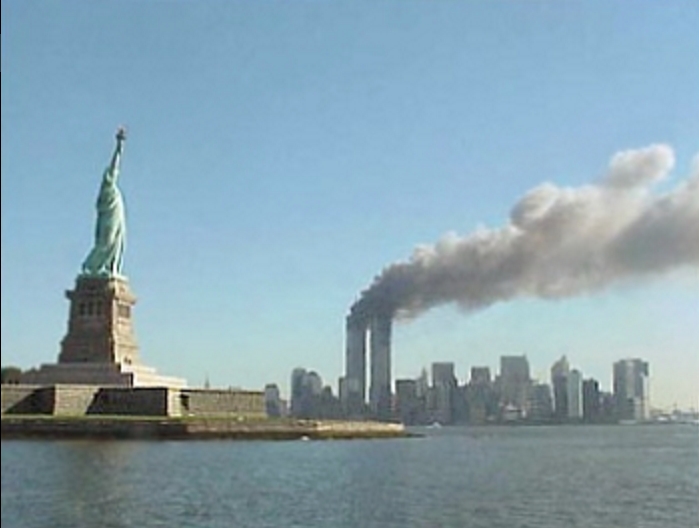
The administration’s efforts, while accelerated, build on processes that began during the US response to the September 11 attacks, as Klippenstein explained:
A “pre-crime” endeavor, preventing attacks before they happen, is core to the post-9/11 concept of counterterrorism itself. No longer satisfied to investigate acts of terrorism after the fact to bring terrorists to justice, the Bush administration adopted preemption. Overseas, that led to aerial assassination by drones and “special operations” kill missions. Domestically, it led to a counter-terrorism campaign whose hallmark was excessive and illegal government surveillance and the use of undercover agents and “confidential human sources” to trap (and entrap) would-be terrorists.
However, the Trump administration is expanding the War-on-Terror mandate with fewer guardrails.
“Now, with Donald Trump’s directive retooling the counter-terror apparatus to go after Americans at home, this means monitoring political activity, or speech, as an investigative method to discover ‘radicalism,‘” Klippenstein said, noting that the NSPM-7 breaks with post-Watergate national security documents by failing to mention the First Amendment rights to protest and organize.
White House Deputy Chief of Staff Stephen Miller is already eager to make use of the document.
“We are witnessing domestic terrorist sedition against the federal government,” he wrote on social media on Friday. “The JTTF has been dispatched by the Attorney General, pursuant to NSPM-7. All necessary resources will be utilized.”
In an interview with Greg Sargent for the New Republic, Trump ally Steve Bannon confirmed that Miller and others in the administration were preparing to go after left-liberal groups and media whose criticism of Immigration and Customs Enforcement (ICE) could be interpreted as “goading” on violence against the agency.
Referring to Miller’s comments that calling ICE authoritarian incited violence and terrorism, Bannon responded, “Stephen Miller is correct—more importantly he’s in charge.”
The threats of investigations put liberal and left-leaning organizations in a tough place. On the one hand, they want to prepare as best they can. On the other, they do not want to obey in advance.
“Officials at these groups tell me they must strike a balance between being clear-eyed about how bad this could get while not letting it discourage political activity,” Sargent wrote. “That latter form of surrender is exactly what Trump and Miller want. And under no circumstances should anybody willingly hand it over to them.”