Alutiiq Museum Launches Refuge Rock Monument Planning Project
By Alutiiq Museum on Comments Off on Alutiiq Museum Launches Refuge Rock Monument Planning Project
Two-Year Effort Will Guide Community Planning for a Monument Honoring Awa’uq
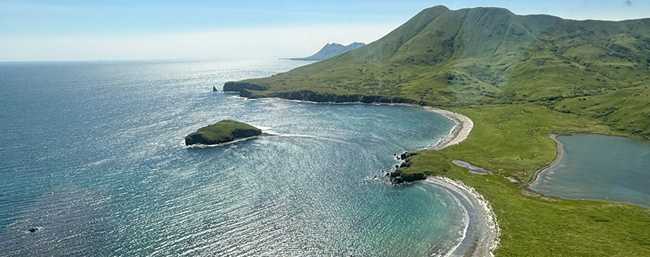
Photo of Refuge Rock is provided courtesy of Keller Wattum.
KODIAK, AK: As Kodiak approaches the 242nd anniversary of the events at Awa’uq, the Alutiiq Museum is pleased to announce the launch of the Refuge Rock Monument Planning Project, a two-year community planning effort that will guide the creation of a public monument in memoriam of Awa’uq and the Alutiiq/Sugpiaq Ancestors who perished there.
The Museum has selected Gínga & Igniñ Collective, an Alaska Native nonprofit, to serve as project manager for the planning process. The Collective’s team, led by Silugngataanit’sqaq Melissa Marton, will support the formation of a community Advisory Committee, lead public engagement across Kodiak and Old Harbor, and guide the project toward a monument concept and site that reflect the community’s own vision for how this history should be remembered.
“This project belongs to the community,” said April Counceller, Executive Director of the Alutiiq Museum. “Our role, and the role of our project management team, is to hold open the space for Elders, descendants, and community members to decide together how this history is told and how it is honored. We are grateful for the opportunity to begin this work.”
On August 14, 1784, Russian fur trader Grigorii Shelikhov led an attack against several thousand Alutiiq people who had gathered for safety at a refuge rock, a small, steep-walled island off Sitkalidak Island near present-day Old Harbor traditionally used as a place of shelter during conflict. After a standoff of several days, Russian forces crossed a narrow spit of land exposed at low tide and opened fire with cannon and muskets. Historical estimates range from 200 to 500 Alutiiq people killed, with many more taken hostage. Shelikhov and his men went on to force Alutiiq hunters into servitude harvesting sea otter pelts, marking the beginning of Russian colonial rule on Kodiak Island. The site is remembered today by its enduring Alutiiq place name, Awa’uq, meaning “to become numb.”
“The massacre, led by Russian fur traders against Alutiiq/Sugpiaq tribal members, changed the history of all Alaska. But few people in Kodiak even know about it, and those who do may only know the basics,” said Counceller. Community members have recently asked why the events at Awa’uq are not more widely known, and the Museum hopes this planning project, and the public conversations it generates, will help change that.
Awa’uq is remembered today not only as a site of tragedy, but as a testament to the endurance of the Alutiiq people. The Refuge Rock Monument Planning Project centers that endurance, and will result in a monument in Kodiak alongside a dedicated commemoration plan developed with the village of Old Harbor, whose community holds the closest relationship to this history.
The public is invited to learn more about the project at a Town Hall meeting on Wednesday, September 2, 2026, from 6:00 to 8:00 PM at the Alutiiq Museum. The evening will feature a presentation and community discussion about the events at Awa’uq, including the history leading up to and following the massacre, led by Dehrich Chya, the Museum’s Director of Language & Living Culture. The event will also be live streamed for those unable to attend in person. This will be the first of several public engagement opportunities planned over the course of the project, with additional details shared on the Museum’s website and social media channels as the date approaches.
“Our Alutiiq community has never been given the space to fully reckon with that history together. This monument project provides an important opportunity to open that healing process,” said Silugngataanit’sqaq Melissa Marton, Lead Project Manager with Gínga & Igniñ Collective. “We are honored to walk alongside the Alutiiq community, the people of Old Harbor, and the broader Kodiak community as they decide together how Awa’uq is remembered.”
Those interested in following the project or joining the Town Hall are encouraged to contact the Alutiiq Museum.
The Alutiiq Museum is a non-profit organization dedicated to preserving and sharing the history and culture of the Alutiiq/Sugpiaq, an Alaska Native people. Representatives of Kodiak Alutiiq organizations govern the Museum with funding from charitable contributions, memberships, grants, contracts, and sales.