By Alutiiq Museum on Comments Off on Awl-Alutiiq Word of the Week
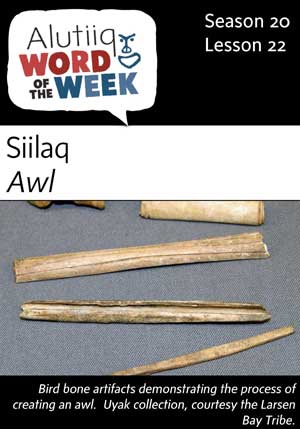
Photo: Bird bone artifacts demonstrating the process of creating an awl. Uyak collection, courtesy of the Larsen Bay Tribe.
Awl — Siilaq, Siilagkaq (N) Siilaq ipegtuq. – The awl is sharp.
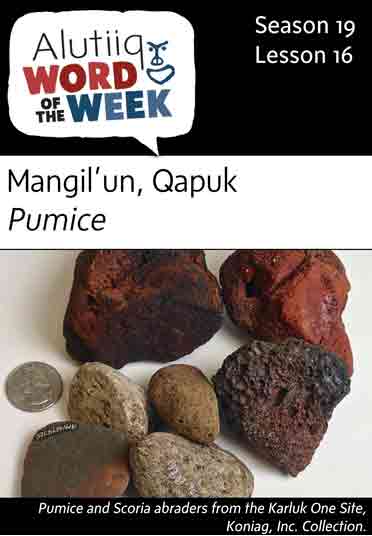
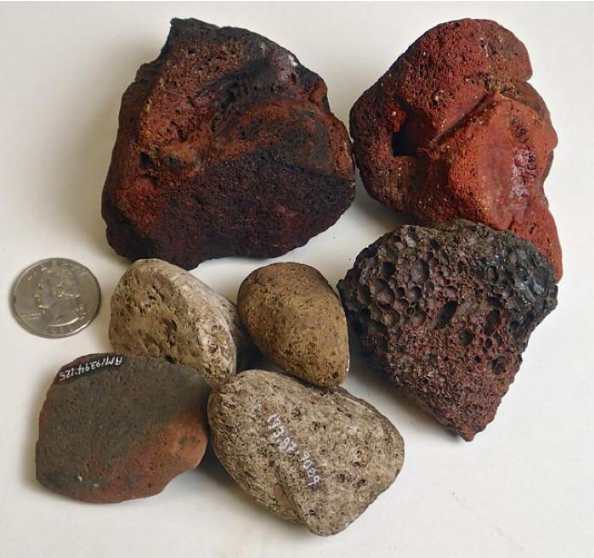
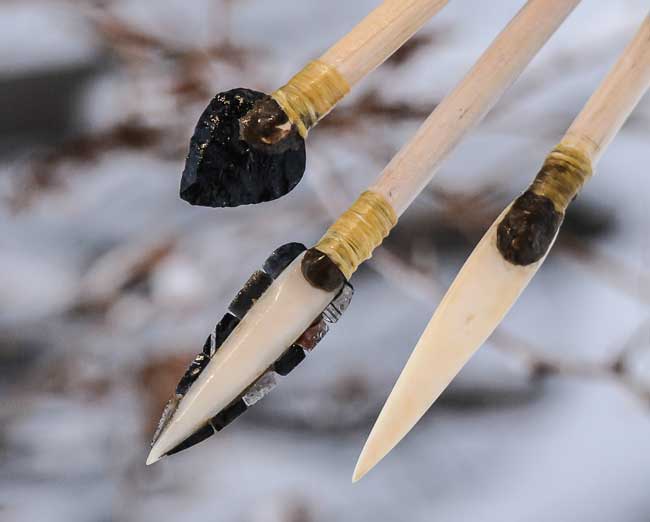
An awl is a sharp, pointed tool used to punch holes in leather. In prehistoric times, Alutiiqs fashioned awls from wood, bone, and ivory. Archaeological data indicate that bird bone was the most common material. To create an awl, a carver removed the knobby ends from the hollow wing bone of a large bird. This created a tube from which long narrow slivers of bone were cut. The slivers were then ground to a sharp point with a piece of pumice or sandstone.
Awls were an important component of sewing kits. Using an awl, a seamstress would punch multiple holes in the skins she was working. Then, she used her needle to pass strands of sinew through the holes to create stitches. This kept her delicate needle from breaking.
In addition to clothing, women sewed skin covers for traditional boats. Each spring, groups of women worked together to mend old covers and create new ones from sea-mammal hides. An older woman might lead the group, creating pieces of thread from porpoise sinew while directing the sewers. When finished, the cover was oiled, pulled over a wooden boat frame, and stitched closed.