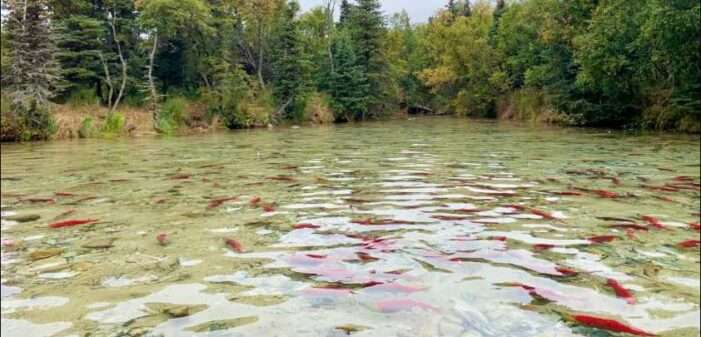
The Bristol Bay commercial fishery is the world’s largest producer of wild sockeye salmon. Alaska Sea Grant-supported researchers are working to provide new information for the region’s fisheries managers to understand trends and anticipate changes to the sockeye salmon fish populations. The scientists are using long-term data of field observations, satellite imagery, and community ice […]
For thousands of years, the Tlingit people have fostered systems of science and education indigenous to their home, allowing each clan to maintain stewardship of their lands. For generations, this traditional way of life brought prosperity to the Southeast Alaska communities. Many rely on the continued availability of wild seaweed harvesting, particularly of intertidal species. […]
Since its inception, the Alaska Sea Grant State Fellowship Program has launched the careers of over 60 professionals. The fellowship class size has expanded from just two in its first year to a cohort of 17 in the 2024 class. The demand for skilled professionals in marine science and policy by Alaska organizations has guided the program’s […]
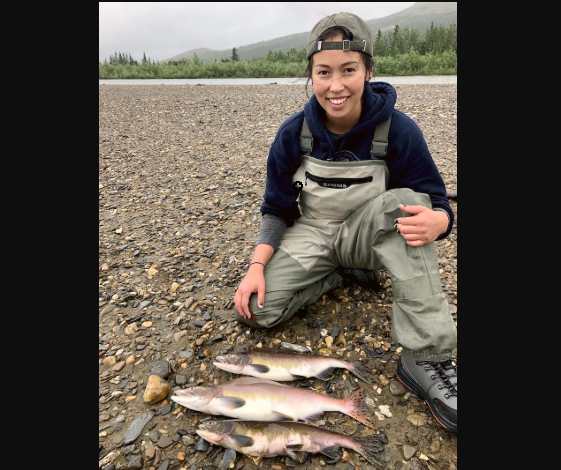
The Arctic is changing, and scientists and residents alike are interested to understand both the reasons for and impacts of these changes, including how it’s affecting fish populations that Alaskans rely on. To explore changing distribution patterns of Pacific salmon in the Arctic, Elizabeth Lindley, a PhD student at the University of Alaska Fairbanks, is […]