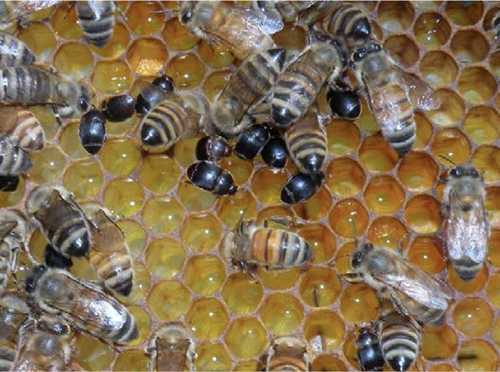
A beetle that harms honey bees has been found in Alaska, according to the Alaska Division of Agriculture. Small hive beetles eat pollen, bee eggs, larvae and pupae (bee brood), and honey inside the hive. Their activity turns the honey foul and slimy. Their presence can lead to colony loss and reduced honey production, resulting in […]
Ice can dissolve iron minerals more effectively than liquid water, according to a new study from Umeå University. The discovery could help explain why many Arctic rivers are now turning rusty orange as permafrost thaws in a warming climate. The study, recently published in the scientific journal PNAS, shows that ice at minus ten degrees […]
Long baleen whale mothers are more likely to have female calves than males, according to a new study led by the University of Washington. The findings contradict a popular evolutionary theory postulating that strong mammals benefit more from birthing males. In 1973, Robert Trivers and Dan Willard proposed that fit female mammals can improve their odds for […]
In the last few years, home freeze-dryers have been gaining popularity as a food preservation tool. In a free class hosted by the University of Alaska Fairbanks Cooperative Extension Service, Professor Emeritus Leif Albertson will look at freeze-dryer safety, value and practical applications. He’ll also review how this technology compares to other traditional food preservation […]