Research confirms saxitoxin poisoning in seals and the presence of harmful algal species.
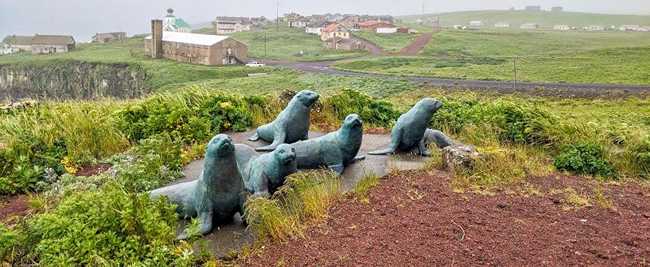
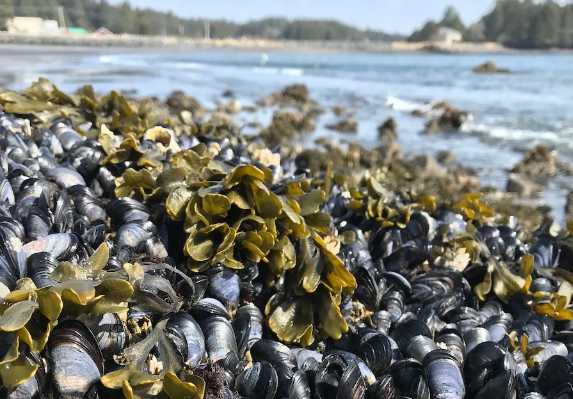
St. George Island. Credit: NOAA Fisheries
In August 2025, two biologists from NOAA Fisheries’ Alaska Region Protected Resources Division traveled to St. George Island to conduct routine maintenance on NOAA facilities. Upon their arrival, they began receiving reports from residents about a high number of northern fur seals found dead in unexpected locations on the island.
Over the next week, the biologists followed up on the reports and confirmed the deaths of 13 seals. The seals showed no obvious trauma or other apparent cause of death. As more reports came in from the community, the total number of dead seals increased to 21, all found in similar condition and in unexpected locations. Additionally, scientists found two juvenile fin whales and one juvenile Steller sea lion dead on the island. They also observed numerous dead seabirds in various coastal locations.
Initial Findings and Similarities to Other Seal Deaths in the Pribilof Islands
It’s not uncommon to find dead adult fur seals within breeding areas, often caused by the aggressive territorial behavior of adult male fur seals during the breeding season. However, the dead seals on St. George were located outside of breeding areas, which is rare. Five seals were found dead among live seals at an inland hauling ground, where non-breeding juveniles gather. The other dead seals were in the surf, adjacent to but outside of known fur seal breeding and resting areas.
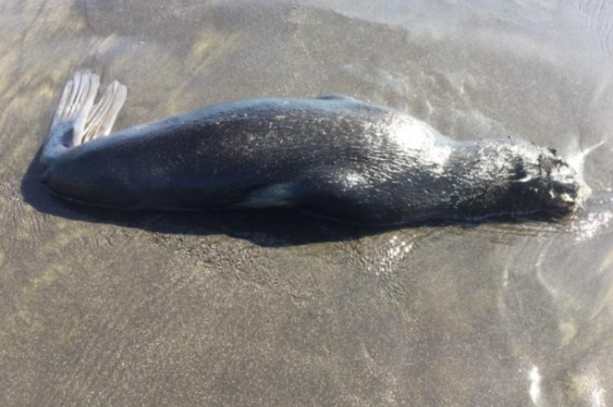
Two dead northern fur seals on the beach on St. George Island in August 2025. Both tested positive for saxitoxin. Credit: NOAA Fisheries
The NOAA Fisheries biologists were able to perform necropsies (animal autopsies) on eight of the dead seals and collected samples of feces and tissues to send for lab analysis. According to Lydia Kleine, one of the NOAA biologists conducting the necropsies, the examination showed no evidence of external or internal injuries or illness.
“The body condition, blubber thickness, and fat were within normal range,” Kleine said. “However, we noted that the condition of the animals and the circumstances of their deaths were very similar to another harmful algal bloom in the Pribilofs last year.”
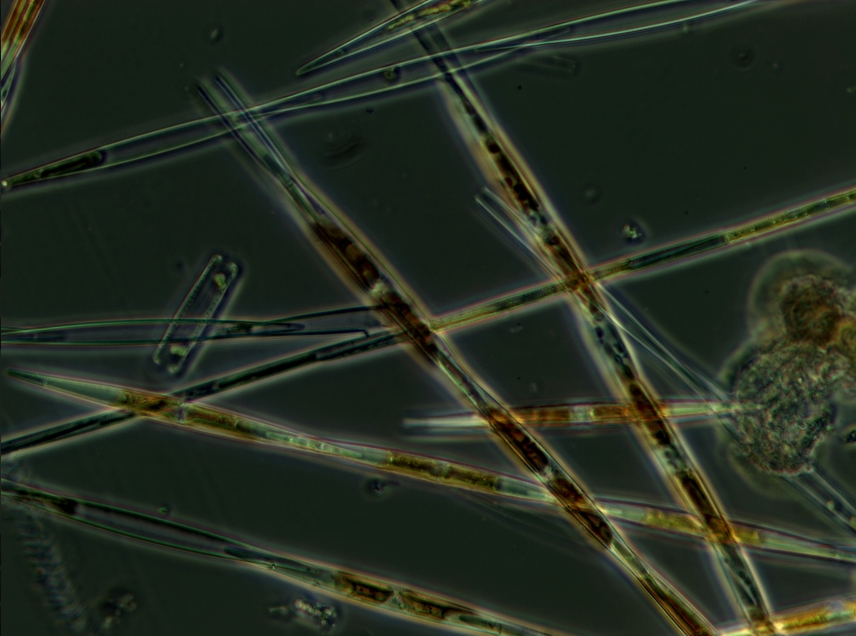
In August 2024, 10 fur seals and many fish were found dead on a beach on St. Paul Island. Testing conducted by NOAA Fisheries’ Wildlife Algal-toxin Research and Response Network for the U.S. West Coast confirmed the presence of saxitoxin in all seals and fish that were tested. Saxitoxin is a potent neurotoxin produced by the harmful algal species Alexandrium catenella. During this time, a dense bloom of A. catenella was also detected in the surrounding area.
Harmful algal blooms occur when certain types of microscopic algal cells naturally thrive and grow to high densities in marine ecosystems. Certain environmental conditions can cause the algae to rapidly “bloom” and produce potent toxins. Shellfish like clams, small plankton-eating invertebrates like krill, and fish such as herring can accumulate neurotoxins, such as saxitoxin, as they feed by filtering water. Marine mammals preying on contaminated krill, fish, or shellfish can then absorb the toxin.
Test Results and Link to Harmful Algal Bloom
All of the dead seals on St. George tested negative for Highly Pathogenic Avian Influenza, or avian flu. Researchers sent samples taken from the seals to the Network’s lab at NOAA’s Northwest Fisheries Science Center for analysis.
Results from fecal tests and other tissue samples, such as liver or kidney, showed saxitoxin exposure in all eight fur seals sampled, at varying levels. “One seal had the highest level of saxitoxin ever recorded for a northern fur seal,” said Dr. Kathi Lefebvre, a research biologist who tested the samples. “These high levels provide strong evidence of biotoxin poisoning in the animals.”
St. George is part of the Pribilof Islands, located 300 miles from mainland Alaska in the Bering Sea. It is home to an Unangan (which means “The People of the Sea”) community of about 40 people. The Pribilofs include the islands of St. George, neighboring St. Paul, Walrus, Otter and Sea Lion Rock. They are also home to about half the world’s population of northern fur seals, which breed there each summer. The deep cultural connection of the Pribilof Unangan and their subsistence reliance upon northern fur seals and other marine mammals is longstanding and remains strong to this day.
The population of the Eastern Pacific stock of Northern fur seal, which includes the breeding populations of the Pribilofs and Bogoslof Island, once totaled 2.2 million seals. In 1988, they were designated as depleted under the Marine Mammal Protection Act because their numbers had declined by more than 50 percent. Today, the population is about 600,000 seals. NOAA Fisheries and the local Tribes, the Traditional Council of St. George Island, and the Aleut Community of St. Paul Island, have formal co-management agreements and work together to understand threats to the species and co-manage subsistence use.
As the Arctic Ocean ecosystem warms, harmful algal blooms are becoming more frequent, stronger, and spreading over larger areas. Community concerns about their impacts on wildlife and ecosystem health are increasing.
“People living in the Pribilofs and other remote communities in Alaska rely on marine resources for food and cultural practices. Toxins from harmful algal blooms put those resources at risk,” Lefebvre said. “Data collected from these fur seals provide valuable information on the effects of toxin exposure on marine wildlife, which can help us reduce those risks.”
Lefebvre emphasized the importance of Traditional Knowledge, highlighting that Indigenous communities are first-hand observers of the environmental changes impacting marine resources. Their valuable observational and historical insights make close collaboration essential.
NOAA Fisheries Alaska Region, the Traditional Council of St. George Island, and the Aleut Community of St. Paul Island are continuing to monitor the health of marine mammals in the Pribilofs.