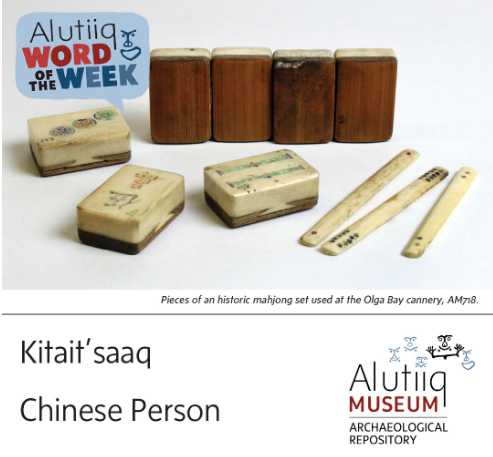
KITAIT’SAAQ – CHINESE PERSON CUUMI KITAIT’SAAT TAITAALLRIIT KAANARIMEN PEKCATURLUTENG. – CHINESE PEOPLE USED TO COME TO WORK IN THE CANNERIES. Late 19th century political unrest in China led large numbers of people to leave the country. Booming industries—the gold rush, railroads, and canneries—attracted Chinese immigrants to the United States. On Kodiak, Chinese laborers were a critical […]
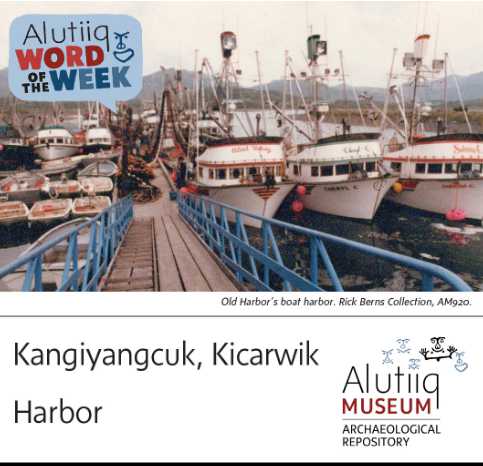
KANGIYANGCUK, KICARWIK – HARBOR PARAGUUTAQA KICAK’GKA KANGIYANGCUGMI. — I ANCHORED MY BOAT IN THE HARBOR. Alutiiq people have long located their settlements in places that provide safe access to the ocean. In Kodiak’s stormy climate, the ability to launch and land boats is essential for people who hunt, fish, and work on the water. With […]
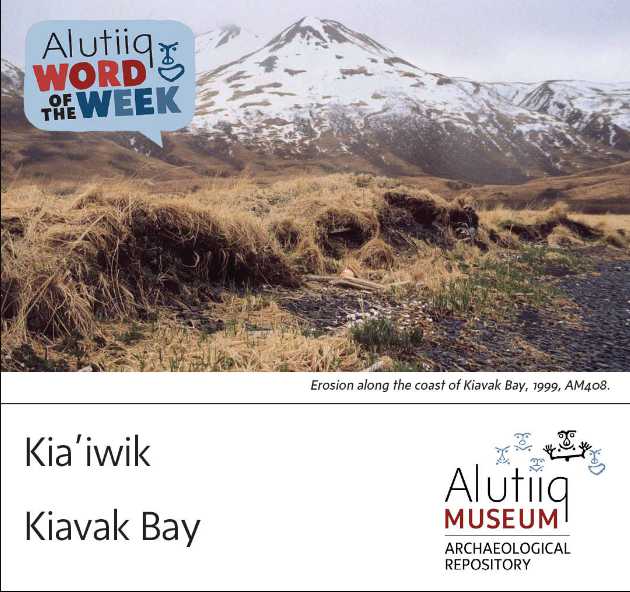
KIA’IWIK – KIAVAK BAY KIA’IWIK YAQSIN’ITUQ NUNIAMEK. – KIAVAK BAY IS NOT FAR FROM OLD HARBOR. Kiavak Bay lies on the southeast coast of Kodiak Island. This long, narrow waterway stretches about 8 km west into the Kodiak Mountains. A spit divides the bay in two, creating distinct inner and outer environments. The outer bay […]
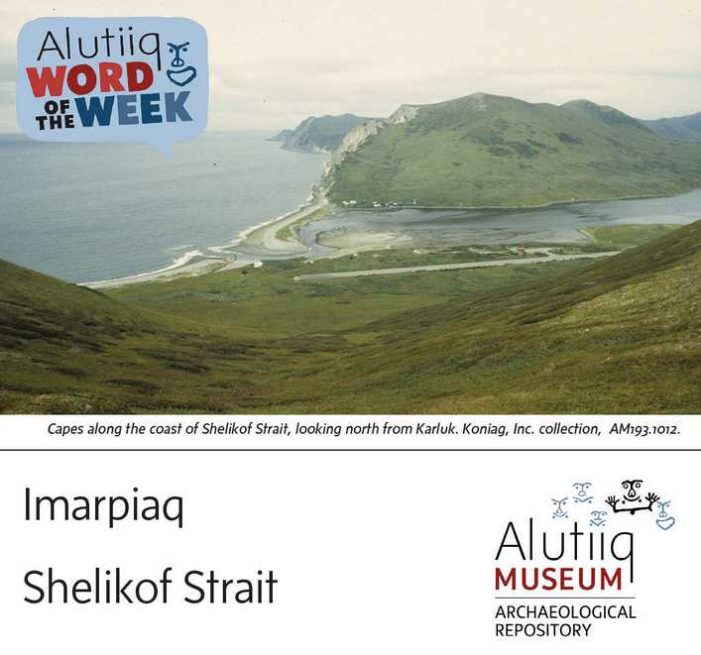
Imarpiaq – Shelikof Strait Imarpiamen qayanilu. – Don’t kayak in Shelikof Strait. Shelikof Strait runs along the west coast of the Kodiak Archipelago, separating the islands from the Alaska Peninsula. It stretches about 240 km from the entrance to Cook Inlet to the southwestern end of Kodiak Island. The straight is a glacial trough, deeply […]