• Search in Site

Search in Site

Alaska Native News

  • HOME
  • Featured
  • General
  • World
  • National
  • State
  • Rural
  • Arctic
  • Science/Education
  • Health
  • At Sea
  • Politics
  • Weather
  • Tides
  • Entertainment
    • Daily Crossword/Sudoku
    • Comics
  • Opinions/Op/Ed/Letters
    • Op/Ed and the Editor
    • Submit Press Release, OP/ED or Letter to the Editor
  • Advertising
  • Contact Us
  • North Slope/Northwest Alaska
  • Interior Alaska
  • Southwest Alaska
  • Southcentral
  • Southeast Alaska
  • This Day in Alaskan History
  1. Home
  2. /
  3. Featured
  4. /

By Alutiiq Museum on Sep 26, 2021Comments Off on


S2414TUPUURUQ – AXE
TUPUURULLEQ YAAMAMEK CANAMAUQ. — THE OLD AXE IS MADE OUT OF STONE.

Today, Alutiiq speakers refer to axes and adzes with the term tupuuRuq, a word derived from the Russian term for an axe. However, historic sources reveal that there were once distinct Alutiiq terms for different types of adzes. The verb cikllarluku means to split or chop something, and cikllaun is a splitting adze used to break apart logs. In contrast, cakillukumeans to carve or hew, and cakiun is a planing adze, used for shaping wood.

Whatever their functions, adzes are one of the most ancient and enduring pieces of Alutiiq technology. The very early residents of Kodiak chipped small adzes from local stone and ground the bits to a sharp edge. For thousands of years, the style and manufacture of these tools remained similar. Craftsmen even used the same materials—a pale greenstone and a blue green schist that outcrop along the west coast of the archipelago.

Over time, as people built houses to hold multiple families, constructed large community buildings, and crafted big open skin boats, the size and variety of woodworking tools expanded. Adzes from the last 600 years of Alutiiq history match historically recorded terms. Craftsmen pecked greywacke beach cobbles into heavy cikllaun—splitting adzes, some about the size and shape of a shoe. From blocks of greenstone they chipped and ground large cakiun planing adze blades useful for shaping planks and boat parts.

In the 18th century, Russian traders introduced large, durable iron axe heads, tupuuRuq, which eventually replaced traditional stone tools.

Source: Alutiiq Museum[content id=”79272″]

  axemalutiiq, Kodiak, museum, word of the week

added by Alutiiq Museum on Sep 26, 2021
View all posts by Alutiiq Museum →

Related Posts:

  • AMHS's M/V Tustumena docked in False Pass. Image-Shishaldin/ Creative Commons Attribution 3.0 Unported license.
    AMHS to Increase COVID-19 Mitigation Protocols
  • From left to right: Sen. Bert Stedman, R-Sitka; U.S. Sen. Dan Sullivan, R-Alaska; Ketchikan Borough Mayor Rodney Dial; and U.S. Secretary of Commerce Chief of Staff Michael Walsh Jr. in Ketchikan on August 8, 2020. Photo courtesy of the Office of Sen. Stedman.
    Senator Stedman attends tour of Fairweather dock
  • caribou 40mile
    BLM Opens Fortymile Caribou Federal Subsistence Hunt…
  • Credit: Michael_Baucham via Pixabay
    Breathing highway air increases blood pressure, UW…
  • Illustration of kidney stones. Image-CHOP
    Oral Antibiotics May Raise Risk of Kidney Stones
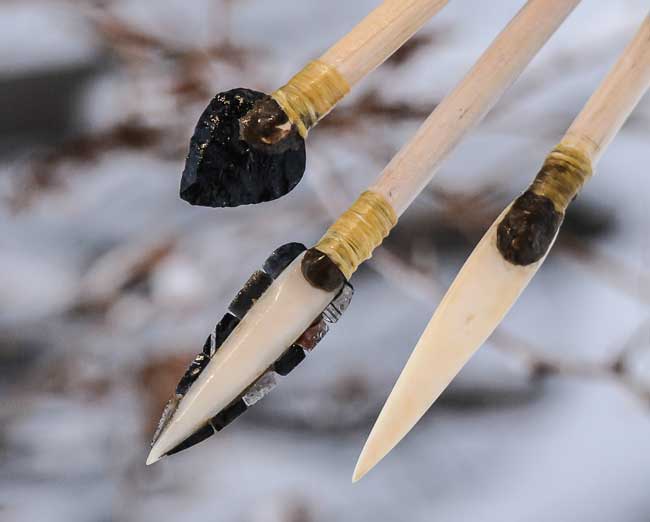
  • University of Washington researchers re-created ancient projectile points to test their effectiveness. From left to right: stone, microblade and bone tips.Janice Wood
    Reconstructing an Ancient Lethal Weapon
  • Senator Dan Sullivan
    U.S. Treasury Finally Takes Action on Russian…
  • CoverArt_GabrielUgesto2023_small-copy-2048×811
    Fresh fossil finds in Africa shed light on the era…
  • Advertise with Us
  • Submit Press Release, OP/ED or Letter to the Editor
  • Contact Alaska Native News
  • DMCA
  • Privacy Policy
© 2026, ↑ Alaska Native News