• Search in Site

Search in Site

Alaska Native News

  • HOME
  • Featured
  • General
  • World
  • National
  • State
  • Rural
  • Arctic
  • Science/Education
  • Health
  • At Sea
  • Politics
  • Weather
  • Tides
  • Entertainment
    • Daily Crossword/Sudoku
    • Comics
  • Opinions/Op/Ed/Letters
    • Op/Ed and the Editor
    • Submit Press Release, OP/ED or Letter to the Editor
  • Advertising
  • Contact Us
    • North Slope/Northwest Alaska
    • Interior Alaska
    • Southwest Alaska
    • Southcentral
    • Southeast Alaska
    • This Day in Alaskan and U.S. History
  1. Home
  2. /
  3. Featured
  4. /

By Alutiiq Museum on Jul 21, 2024Comments Off on


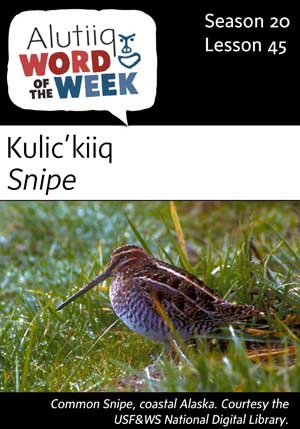
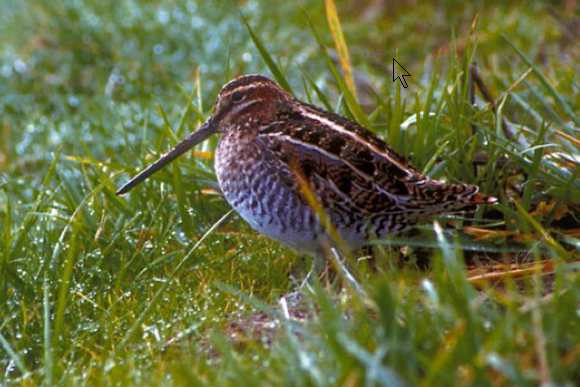
Photo: Common Snipe, coastal Alaska. Courtesy of the USF&WS National Digital Library.

Snipe — Kulic’kiiq
Kulic’kiit miktut, kesiin piturnirtut. – Snipes are small but they taste good.

The common snipe (Gallinago gallinago) is a shorebird found around Kodiak’s grassy coastal meadows, ponds, and fields during summer. This member of the sandpiper family breeds yearly across northern North America, then heads south to winter in warmer climates.

A small bird, snipes have a long, straight bill designed for pursuing shellfish, insects, and worms in the mud. Mottled brown plumage keeps the shy snipe camouflaged. However, snipes will flush when approached and fly in a zigzag pattern to escape predators. This makes them hard to harvest.

Related Content

  • Harbor-Alutiiq Word of the Week

    Photo: Old Harbor’s boat harbor. Rick Berns Collection, AM920.
  • Meteor-Alutiiq Word of the Week

    Image: Fireball. Digital media by Denise Anderson, 2021.
  • Museum Published Digital Alutiiq/Sugpiaq Place Names Map

    Whale Island

Alutiiq Elders report hunting snipes at low tide in the nighttime. People approach the birds on sandbars, using a spray of pellets from a shotgun to bring down the darting snipes and harvest a number of animals at once. Rather than pluck snipes, people skin them and add their small bodies to soups and stews. They are also tasty roasted.

Harvesting small birds may seem like a lot of work for a small return, but it is a common practice in the Arctic. Like collecting shellfish, or fishing for herring, people take advantage of the abundance of food represented in many small packages to create nourishing meals. This is a strategy many societies use, particularly when large animals like seals or caribou are hard to harvest or not available.

Alutiiq Museum
[content id=”79272″]

  alutiiq, museum, snipe, wordoftheweek

added by Alutiiq Museum on Jul 21, 2024
View all posts by Alutiiq Museum →

Related Posts:

  • snipe
    Snipe-Alutiiq Word of the Week-May 5th
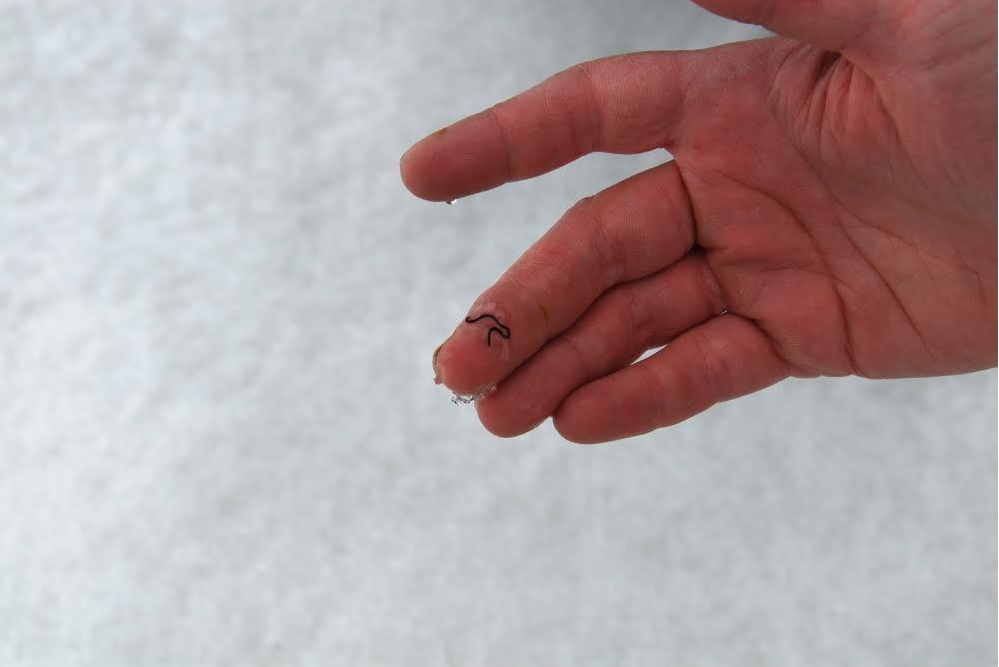
  • An ice worm on Bering Glacier. Photo by Chris Larsen.
    Ice Worms: Enigmas of the North
  • Photo by Seth Beaudreault A Wilson’s snipe near Toolik Field Station in northern Alaska.
    A bird and a puzzling sound lead to discovery
  • Image-Columbia University
    How the Tongue Keeps its Tastes Straight
  • logo mask500 (1)
    Senators Introduce Capital Construction Fund Reforms…
  • jobs-ak-e1555531251239
    We Can't Wait! White House Announces Employment…
  • Senator Sullivan speaking to Alaska Legislature. Image-Gavel Alaska/Youtube video screengrab
    Sullivan Touts “Alaska Comeback,” Historic…
  • image2021-04-14
    Alaska Shellfish and Seaweed Festival


  • Advertise with Us
  • Submit Press Release, OP/ED or Letter to the Editor
  • Contact Alaska Native News
  • DMCA
  • Privacy Policy
© 2026, ↑ Alaska Native News