Alaskans call for immediate action from the AK Legislature and State on transboundary mining issue
By Breanna Walker Salmon Beyond Borders on Comments Off on Alaskans call for immediate action from the AK Legislature and State on transboundary mining issue
The State of Alaska and fishermen, Tlingit & Haida, and technical experts tell very different stories of B.C. transboundary mining at House State Affairs Committee hearing
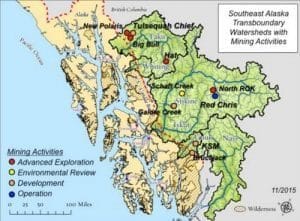
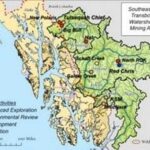
Southeast Alaska Transboundary Watersheds with mining activities. Image-Salmon without Borders
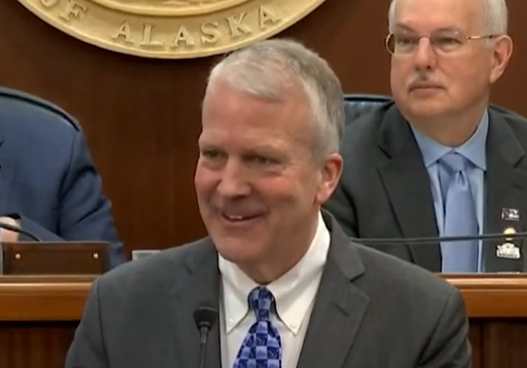
JUNEAU, ALASKA—Alaskans testifying before the Alaska State Legislature House State Affairs Committee on Thursday, May 7th, agreed on an immediate need for greater State of Alaska transparency and engagement when it comes to transboundary rivers flowing from British Columbia into Southeast Alaska; a binding international agreement for Alaska and B.C.’s shared international rivers; and more. The Committee heard from the Central Council of Tlingit & Haida Indian Tribes of Alaska, Alaska Longline Fishermen’s Association, multiple nonprofits and the State of Alaska. The consensus came after testimony from Alaska Department of Fish and Game Commissioner Doug Vincent-Lang and Stephen Buckley of the Alaska Department of Natural Resources, in which Vincent-Lang excluded key details on the state of B.C. mining activity in the headwaters of the Taku, Stikine, Unuk and Salmon Rivers.
“This hearing drove home both the necessity for the State of Alaska to uphold the commitments it made under the Alaska-B.C. transboundary MOU ten years ago, and the difference between what the State of Alaska says is happening versus what fishermen, Tribes, and other downstream Alaskans perceive based on reports and media coverage in B.C.,” said Breanna Walker, Salmon Beyond Borders director. “It’s disturbing to hear presentations from the State that not only make light of B.C.’s planned industrialization of our wild salmon rivers, much of which is now to be fast-tracked, but downplay and minimize existing pollution on the B.C. side of the border.”
“These rivers are not just waterways, they are our food systems, our economies, and our identity,” said Paulette Moreno, 6th vice president of the Central Council of Tlingit and Haida Indian Tribes of Alaska, at the hearing. “For nearly 15 years, we have called for stronger state and federal engagement to secure binding protections for these shared rivers. Yet today, Southeast Alaska remains exposed to the risk of mining in British Columbia, where projects are being fast-tracked and Tribal consultation is limited.”
“Pollution in one river system could well have serious negative impacts on fisheries throughout the entire region,” said Brian Lynch of Rivers Without Borders. “These low-grade transboundary mines are better described as waste generators. They target mostly gold, more than 90 percent of which is used for gold bullion and jewelry. It’s ironic that over 70 percent of the gold dug up from the ground is then buried underground again in vaults.”
“I’m here today to urge the House State Affairs Committee and all of the legislature to do everything in your power to ensure the Dunleavy administration and the administration that comes in behind them defends Alaska’s fisheries and the watersheds that sustain our fisheries,” said ALFA Executive Director Linda Behnken at the hearing. “Salmon are especially vital to our region’s economy, to the stability of our communities, to our identity, and to our way of life. Our region’s fisheries would not be possible without the Southeast transboundary rivers, in particular, the Taku, Stikine, and Unuk Rivers.”
“From a practical perspective, the work plan created under that MOU [Alaska-B.C. Memorandum of Understanding] has proved to be ineffective,” said Dr. David Chambers of the Center for Science in Public Participation at the hearing. “The Alaska Department of Natural Resources is unable to or does not commit the personnel and financial resources necessary to actively participate in the cooperating agency meetings that are held to discuss individual mine design and environmental reviews…. As a result, Alaska fishing, tourism, Tribal, and conservation interests are not presently being properly represented by the state of Alaska in these deliberations.”
The State, in contrast, painted a rosy picture, arguing that the past eight years of no public comments from the State on any transboundary mine; nonbinding meetings of Alaska and B.C. government staff from which scant information, if anything, is communicated to the public; and ramped-up development just over the border about which downstream Alaskans have no meaningful say is not a problem. The State argued in part that existing B.C. polluting mines have not been shown to have pollution cross the border, so there is nothing to worry about. It did not mention the fact that salmon are a shared resource that do not recognize borders and that spawn and rear in areas experiencing contamination; that B.C. is ramping up development of these transboundary gold mines, with six slated for fast-tracking; that despite all this activity, B.C. does not assess cumulative impacts; or that B.C. does not require adequate financial assurances for its mines, meaning that Alaskans could be left without recourse should a catastrophic failure occur.
In response to pushback about the urgency of the threat, it’s important to note that the scale of what is being proposed, and fast-tracked, over the border is unprecedented for this region, that there is already ongoing acid mine waste pollution at the abandoned Tulsequah Chief mine and that two B.C. mine sites possess high-risk tailings dams with questionable stability. Selenium, a common byproduct of mining in the transboundary region, has been proven to kill, deform, and impact the reproduction of fish. Mines typically take a while to finance and develop — so concerns about contamination from proposed mines may not become actual contamination for a while.
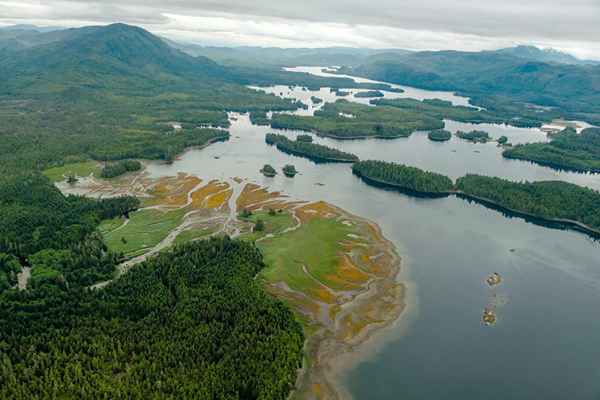
The Taku, Stikine, Unuk, and Salmon Rivers have been centers for culture, commerce, and biodiversity since time immemorial. Today, these rivers represent some of the last remaining “salmon strongholds” in North America. Bucking the trend of steeply declining Chinook salmon returns across the West, almost 43,000 king salmon swam up the Taku to spawn in 2025, surpassing the Alaska Department of Fish & Game’s escapement goal. Thousands of miles of new salmon habitat are predicted to emerge here as glaciers melt – unless British Columbia industrializes them first. Southeast Alaska fisheries generate over $800 million in annual economic impact and support up to 15% of regional employment, with 4,400 resident commercial fishermen and 2,900 seafood processing jobs.
Today, three B.C. acid-generating, gold-copper mines with tailings dams are operating and more than 100 B.C. low-grade hardrock mine projects are in some phase of exploration, proposal, or development in the AK-B.C. transboundary region. B.C.’s Pacific Salmon Foundation recently found that unchecked Canadian mining pressure along shared rivers could lead to “undocumented extinction” of salmon runs. In November 2015, just one B.C. transboundary mine, Red Chris, was operating in the region. In 2025, B.C. researchers published reports highlighting how the Red Chris and Premier mine waste dams are contaminating transboundary waters with selenium and heavy metals.