Testing confirmed widespread exposure of saxitoxin in marine mammals and other wildlife.
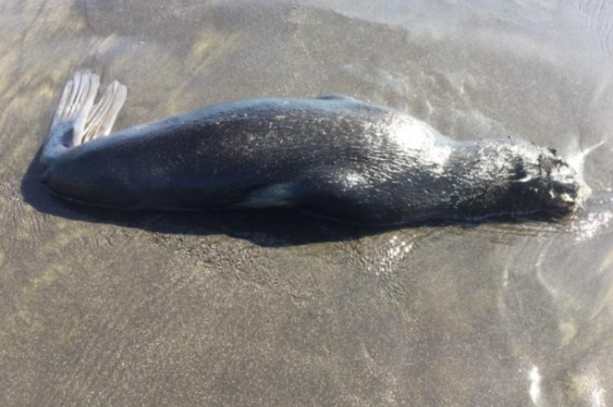
Dead Northern fur seal on St. Paul Island, Alaska. Credit: Paul Melovidov, Ecosystem Conservation Office Aleut Community of St. Paul Island (used with permission).
In the study, researchers collected and analyzed data from 10 dead northern fur seals and hundreds of dead, mostly benthic, fish that washed ashore on a popular beachcombing beach on St. Paul Island, Alaska, in August 2024. St. Paul Island is home to the Aleut Community of St. Paul Island, an Unangax̂ Tribe.
“As the Arctic Ocean ecosystem gets warmer, harmful algal blooms are becoming more frequent, getting stronger, and spreading further,” said Dr. Kathi Lefebvre, a research biologist at NOAA’s Northwest Fisheries Science Center and lead author of the study.
“The findings of this study deepen our understanding of the changing ecosystem and give us new insights about the growing risks of toxin exposure to marine wildlife and coastal communities that rely on the ocean for food. Crucially, this new data also strengthens our ability to monitor and manage harmful algal blooms to mitigate those risks,” she said.
Testing Points to Saxitoxin Exposure from Harmful Algal Bloom
A Tribal member from the Aleut Community of St. Paul Island discovered the animals. Tribal environmental conservation staff collected and froze six northern fur seal carcasses for later analysis by a certified veterinary team to determine the cause of death.
Researchers thoroughly investigated possible causes of death, completing necropsies of the six frozen northern fur seals and all available fish. The researchers also analyzed necropsy results alongside seawater, sediments, and food web samples. Scientists on research cruises collected these samples independently around the same time in surrounding waters. Taken together, the results provided compelling evidence that saxitoxin exposure via the food web was the main cause of death of the northern fur seals.
Ecosystem Sampling Confirms Saxitoxin Prevalence
The research cruise samples revealed the presence of Alexandrium catenella, the organism responsible for producing saxitoxin.
Testing also revealed a prevalence of saxitoxin in all components of the food web in northern fur seal foraging areas, with high concentrations in fish, clams, worms, and seal urine.
Algal Toxins and their Impacts
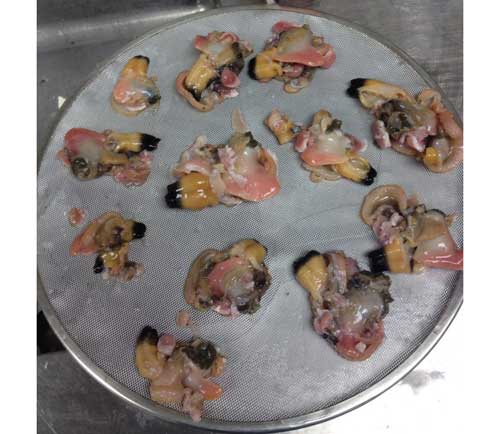
Harmful algal blooms occur when microscopic algal cells that naturally produce potent neurotoxins thrive and grow to high densities in marine ecosystems. Favorable conditions can cause the algae to “bloom.” Shellfish like clams, small plankton-eating invertebrates like krill, and fish such as herring can accumulate saxitoxin as they feed by filtering the water. Marine mammals preying on contaminated krill, fish, or shellfish then absorb the toxin.
Consumption of saxitoxin-contaminated seafood can cause paralytic shellfish poisoning in humans. The confirmed presence of saxitoxins in wildlife does not currently pose a human health risk. However, residents of St. Paul Island may still be affected by impacts on wildlife and other factors closely tied to the health of the ecosystem.
“St. Paul is experiencing a rapidly transforming marine ecosystem with significant impacts on our community,” said Dr. Lauren Divine, Director of the Ecosystem Conservation Office for the Aleut Community of St. Paul Island.
“The culture, economy, health, and food security of our people are closely tied to ocean health, and northern fur seals are vital to Unangax̂ cultural identity and wellbeing. This research is an important contribution to our knowledge of the harmful effects of the changing climate on marine wildlife and will help guide our continued efforts to rebuild the northern fur seal stock on St. Paul,” Divine said.
The study was led by Tribal, agency, and academic scientists from:
Aleut Community of St. Paul Island
NOAA
University of Alaska Fairbanks College of Fisheries and Ocean Sciences