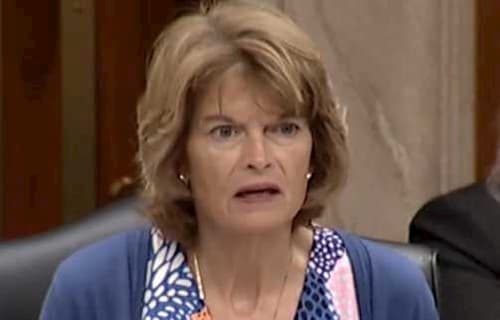
Washington, D.C. – Thursday, U.S. Senators Lisa Murkowski (R-AK) and Senator Sheldon Whitehouse (D-RI) introduced legislation that would help the National Oceanic and Atmospheric Administration (NOAA) better assess and protect our fisheries. The Fisheries Science Modernization Act would incorporate environmental DNA (eDNA) and other biomolecular tools into NOAA’s fisheries science programs, allowing for more cost-effective and expanded survey coverage. This would bolster, not replace, traditional stock assessment surveys by providing NOAA with additional scientifically validated tools to improve data collection, expand survey coverage, and strengthen fisheries management.
This bill would establish national standards for this innovative technology while expanding workforce capacity, strengthening interagency coordination, and supporting private-sector innovation without imposing new regulatory burdens. Senators Dan Sullivan (R-AK), Jeff Merkley (D-OR), Chris Van Hollen (D-MD), Patty Murray (D-WA), Angus King (I-ME), and Adam Schiff (D-CA) are co-sponsors.
“Without accurate stock assessments, we cannot make the informed, science-based management decisions needed to ensure our fisheries remain sustainable for generations to come,” said Senator Murkowski. “Environmental DNA is an innovative, cost-effective tool that will give our scientists a clearer picture of our fisheries while expanding survey coverage and reducing costs. This legislation is the product of extensive collaboration with NOAA, Alaska fishermen, Tribal partners, academia, and industry to modernize how we assess fish stocks using the best available science.”
“With climate change wreaking havoc on fisheries, researchers need to stay ahead of the curve,” said Senator Whitehouse. “This bill will allow NOAA to harness new technologies to keep fish stocks healthy and robust.”
“Reliable fisheries surveys and stock assessments are the foundation of sustainable fisheries management,” said Sen. Sullivan. “I’ve consistently fought to ensure NOAA maintains robust fisheries survey coverage in Alaska, where changing ocean conditions are impacting our subsistence, recreational, and commercially important species and the communities that depend on them. As fish stocks shift and ocean conditions become more variable, we need to invest in both the traditional surveys that have served us for decades and innovative technologies that can make those surveys even stronger. By thoughtfully investing in and integrating new tools, we can improve the quality of stock assessments, better support our fishermen and communities, and ensure America’s fisheries remain among the best managed in the world.”
“To implement the best possible fisheries management strategies, we need the best available data,” said Senator Merkley. “Our bipartisan bill modernizes federal fisheries science and invests in innovative data collection and analysis. Bolstering our tools to monitor fisheries is critical to supporting both Oregon fishermen and responsible, sustainable fishing for generations to come.”
“Environmental DNA is a promising new tool for fisheries and ecosystem assessment that could improve fisheries management while also lowering costs,” said Linda Behnken, Executive Director of the Alaska Longline Fishermen’s Association. “Senator Murkowski’s Fisheries Science Modernization Act will advance this technology while also improving oversight and collaboration.?ALFA supports this bill and applauds Senator Murkowski for her commitment to science-based management of Alaska’s fisheries.”
“The Fisheries Science Modernization Act comes at a pivotal moment for U.S. fisheries management,” said Austen Thomas, Senior Application Scientist. “As an eDNA service provider, Wilderlab USA sees firsthand how environmental DNA can expand monitoring coverage, reduce survey costs, and deliver data on species that traditional methods often miss. This bill’s focus on national standards and predictable procurement pathways is exactly what the private sector needs to invest with confidence in U.S. eDNA capacity. By bringing the private sector into closer partnership with NOAA and other resource agencies, this legislation will help ensure fisheries decisions are grounded in the best available science. We commend Senator Murkowski for this forward-looking legislation and look forward to supporting NOAA’s efforts to modernize how we understand and manage our nation’s fisheries.”
“United Catcher Boats supports the Fisheries Science Modernization Act of 2026 and appreciates Senator Murkowski’s continued leadership in advancing science-based fisheries management,” said Andrea Keikkala, Executive Director of United Catcher Boats. “Senator Murkowski has long demonstrated a deep understanding of the importance of sound fisheries science and the need to ensure NOAA Fisheries has the tools necessary to sustainably manage our nation’s fisheries. We appreciate her leadership in championing innovative technologies that have the potential to strengthen stock assessments, expand scientific capacity, and improve fisheries management. We recommend that Congress ensure NOAA Fisheries has adequate resources to successfully implement these important new responsibilities without reducing investment in existing stock assessments, fishery-independent surveys, cooperative research, observer programs, or other core science activities that are fundamental to science-based fisheries management. Investments in eDNA should complement, rather than displace, the core science programs that have made the United States the global leader in sustainable fisheries management.”
“The United States is a global leader in sustainable fisheries because of our commitment to science-based management,” said Joanna Slaney, Environmental Defense Fund’s Vice President for Political and Government Affairs. “As technology and science continue to advance, it is crucial for NOAA to examine innovative methods to collect fisheries data and further the best available science. EDF appreciates Senator Murkowski and Senator Whitehouse’s leadership to further science that supports thriving ecosystems, fishery resources, and the communities that depend on them.”
“Environmental DNA collection is an exciting new scientific frontier for augmenting our understanding of fisheries and their ecosystems,” saidMeredith Moore, Ocean Conservancy’s Senior Director of Fish Conservation. “The Fisheries Science Modernization Act lays a solid foundation for unlocking this new source of data to improve fisheries management.”
“America’s 11.8 million saltwater anglers depend on healthy fisheries, and sound fisheries management starts with sound science,” said Mike Leonard, the American Sportfishing Association’s (ASA) Vice President of Government Affairs. “Environmental DNA has shown tremendous potential as a tool to supplement traditional fisheries surveys, improve our understanding of marine fish populations, and help managers make more informed decisions. By testing and validating these technologies before incorporating them into stock assessments, the Fisheries Science Modernization Act takes a thoughtful, science-based approach to strengthening marine fisheries research. Better science leads to better management, which ultimately benefits both fish populations and the millions of anglers who contribute more than $145 billion in economic activity to our nation’s coastal communities. ASA appreciates Senator Murkowski’s leadership on this important legislation.”
The legislation is further endorsed by the Cape Cod Fishermen’s Alliance, the Alaska Ocean Observing System, the U.S. Integrated Ocean Observing System, the Western Alaska Community Development Quota Program, and the Pacific Seafood Processors Association.
Currently, NOAA’s stock assessment methods are constrained by high operational costs and limited vessel availability, resulting in gaps in survey coverage. The integration of eDNA, already widely used in the private sector, would help close these gaps by enabling sampling in remote or hazardous environments while reducing costs.
The Fisheries Science Modernization Act would provide the federal government with key tools to better protect and grow our fisheries by modernizing how fish stocks are assessed while expanding agencies’ capacity to use eDNA. Specifically, the legislation:
Modernizing Stock Assessments
Establishes a NOAA eDNA Fishery Stock Assessment Pilot Program to validate methods across diverse regions and species.
Requires NOAA to develop an agency-wide eDNA Implementation Plan detailing how eDNA will be integrated into federally managed fisheries.
Directs NOAA to routinely collect eDNA samples during existing surveys to improve accuracy, expand coverage, and build long-term datasets.
Integrates eDNA into fisheries research and ecosystem monitoring by amending the Magnuson-Stevens Act.
Promotes collaboration among NOAA, fishermen, Tribal Nations, academia, and industry.
Requires annual coordination meetings and reports to the Office of Science and Technology Policy (OSTP) and Congress to ensure accountability.
Building National eDNA Capacity
Creates the National Aquatic Biomolecular Coordination Network (NABCN) to develop national standards for sampling, laboratory workflows, quality assurance and quality control (QA/QC), metadata, and bioinformatics.
Establishes a coordinated multi-agency framework enabling consistent biomolecular monitoring across freshwater, estuarine, coastal, and marine environments.
Expands NOAA’s workforce and laboratory capacity while supporting complementary private-sector services.
Trains National Marine Fisheries Service (NMFS) technicians in eDNA collection, handling, and modeling.
Supports research, innovation, and technology transfer across agencies, academia, Tribal partners, and industry.
Provides transparent performance standards and predictable procurement pathways to encourage U.S. innovation and commercialization of emerging eDNA tools, including autonomous and AI-enabled sampling systems.