New Archaeological Evidence Extends Human Settlement of Kodiak Back 300 Years
By Molly Odell | Alutiiq Museum on Comments Off on New Archaeological Evidence Extends Human Settlement of Kodiak Back 300 Years
[content id=”79272″]
Trevor Lamb excavates a small cobble hearth at the Alagnaruartuliq site. Charcoal from this feature dated to about 7800 years ago. Alutiiq Museum photograph.
KODIAK—Archaeological research at the Alagnaruartuliq site (KAR-00064) on the shore of Kodiak Island’s Karluk Lake has revealed the remains of a very old campsite. A pair of radiocarbon dates on wood charcoal from an ancient hearth suggest that Alutiiq/Sugpiaq ancestors rested and made tools beside the confluence of Karluk Lake and River about 7,800 years ago. This date pushes the human settlement of Kodiak back at least 300 years. Until now, the oldest dated archaeological finds from Kodiak were about 7500 years old. Alutiiq Museum Director of Archaeology Molly Odell explained.
“We went to Alagnaruartuliq last summer to study an ancestral Alutiiq settlement visible on the site’s surface. Beneath a set of house depressions, there was a series of much older occupations. At the very bottom of the site, we found a small hearth made of cobbles associated with stone tools often found in Kodiak’s earliest sites.”
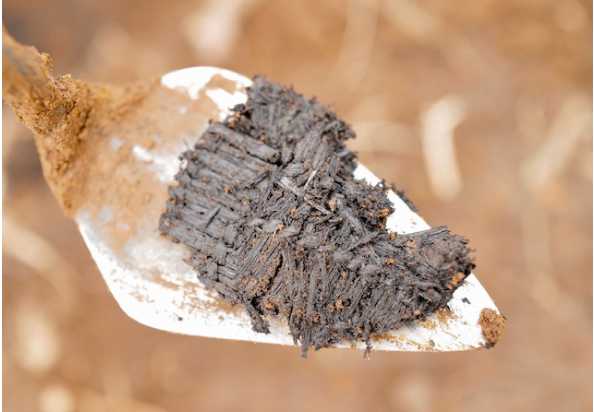
To date the hearth, the archaeologists sent a sample of the wood charcoal it contained to a professional laboratory for radiocarbon dating. When they received a date of 7800 years, they dated a second sample.
“Radiocarbon dates are estimates,” said Odell. “They provide a probable range. The first date was exciting, but to confirm its accuracy, we ran a second date with another lab. The dates were very similar. We are now confident they are good estimates. They suggest the hearth was used about 7800 years ago. This is 300 years older than any other dated settlement from Kodiak.”
“Three hundred years is a long time,” said Alutiiq Museum Curator of Archaeology Patrick Saltonstall. “But the dates are not surprising. We’ve been expecting to find older settlements. People were living along the coast of the Gulf of Alaska at least 10,000 years ago. These were maritime people. They were harvesting resources and traveling to places that required boats. It makes sense that they would have reached Kodiak, that there would be similarly aged settlements here. We just haven’t been able to locate them.”
Alutiiq Museum researchers believe that changes in sea level and coastal erosion have impacted their ability to find older settlers. Archaeologists have located and dated numerous old sites in coastal settings around Kodiak. A recently tested settlement overlooking Kiliuda Bay dated to about 7,400 years ago. The bottom of several settlements on the inner shores of Chiniak Bay are about 7,300 years old. Older dates have been elusive.
“About 7,300 years ago, sea level stabilized in the Gulf of Alaska, and the coast took on more of its modern shape,” said Saltonstall. “Sites dating to this point in time have been relatively easy to find. They are on old shorelines, often beneath younger settlements. Older sites from the coast may be underwater or washed away. In Kodiak’s interior, sea level is not impacting site preservation. It makes sense that we’d find more ancient deposits in this setting.”
Alagnaruartuliq means “lots of kinds of berries” in the Alutiiq language. The research team picked this name for the Karluk Lake site to highlight the rich resources found in Kodiak’s interior and support growing evidence of intensive use of this environment by Alutiiq ancestors. Surveys and excavations by Alutiiq Museum archaeologists illustrate that the courses of salmon streams were intensively settled for thousands of years. Now it appears that even early settlers harvested here.
“Kodiak has such rich maritime resources that researchers have overlooked the economic importance of its inland streams, meadows, and alpine areas,” said archaeologist and Alutiiq Museum Chief Curator Amy Steffian. “Over the past twenty-five years, we’ve been exploring Kodiak’s river valleys and documenting hundreds of sites. We now know that the interior was a critical habitat for hunting and collecting, as well as fishing, throughout the region’s human history. This recent find confirms that Alutiiq ancestors used the interior from first settlement.”
What were Alutiiq ancestors harvesting at Karluk Lake 7800 years ago? Studies from neighboring areas of the Gulf of Alaska suggest salmon populations stabilized and grew after 6,300 years ago. Archaeologists believe that early lake visitors may have been hunting waterfowl, collecting plant foods, or harvesting from the fox, river otter, and bear populations that settled Kodiak well before people arrived.
This week, the Alutiiq Museum launched another season of research at Karluk Lake. Archaeologists will be studying a 1500-year-old settlement to continue learning about the activities that took place in Kodiak’s interior and how they changed over time. They don’t anticipate finding another early settlement, but archaeology is a fickle science, and Saltonstall has his eyes open. “I’m excited to look for more evidence of early settlers,” he said.
“Learning about our history is so important,” said Alutiiq Museum Executive Director April Laktonen Counceller. “Each time we record a site or study an artifact, we add to the knowledge of our remarkable past. We are grateful to Koniag for their support of archaeological research at the Alutiiq Museum. It is revealing our ancestors’ world.”
The Alutiiq Museum’s ongoing research program at Karluk Lake is supported by Koniag. The National Park Service’s Alaska Native Tribal Affairs and Heritage Assistance Programs helped with radiocarbon dating.
The Alutiiq Museum is a non-profit organization dedicated to preserving and sharing the history and culture of the Alutiiq, an Alaska Native tribal people. Representatives of Kodiak Alutiiq organizations govern the museum with funding from charitable contributions, memberships, grants, contracts, and sales.