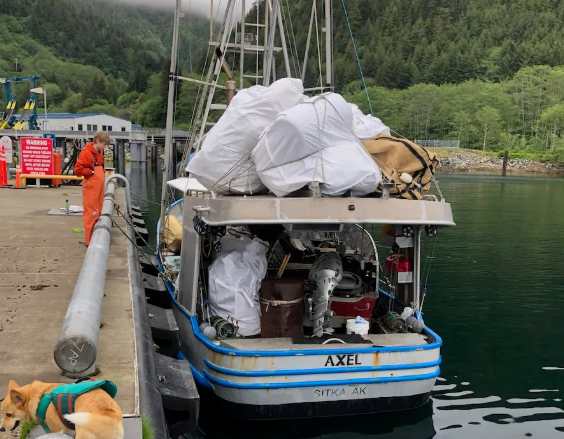
The F/V Axel returns from a long trip with volunteers hauling back 4,200 pounds of debris. Photo courtesy of Jacquie Foss.
Plastic Free July is a global movement to reduce single-use plastics, much of which end up in streams, rivers, and oceans. In Alaska, we’re partnering with leaders in coastal communities to reduce discarded plastics and other marine debris from our shorelines through Alaska Sea Grant’s Community-Led Marine Debris Removal program. This work shows how local knowledge, strong partnerships, and a shared sense of responsibility can lead to positive change.
In Sitka, commercial fishermen Jacquie and Zach Foss are leading a project aboard their fishing vessel Axel. Over the course of two years, they are conducting six multi-day trips to remove debris from the remote island coastlines of Baranof, Chichagof, Kuiu and Coronation, and getting fellow commercial fishermen involved. These shorelines are essential to the local fishing economy and critical habitat for coho salmon. Already this summer, they have cleared over 10,000 pounds of debris from southern Baranof Island.
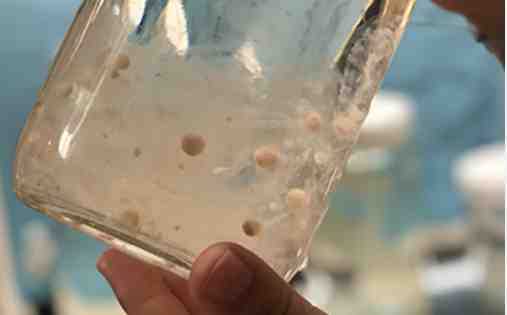
“We’ve seen microplastics in the guts of the salmon we dress, and that hits close to home. As commercial fishermen, we depend on these waters, and it’s on us to help take care of them,” said Jacquie Foss. “With the Axel able to get into tight spots and haul heavy loads, we’re in a good position to reach these remote shorelines and remove the debris we see piling up.”
They bring the debris back to Sitka, where it is recycled, reused or disposed of responsibly, with support from Net Your Problem and Ocean Conservancy. In addition to collecting debris such as derelict nets, foam and plastics, the Fosses are working with other fishermen to report where marine debris is building up, pinpointing hotspots for future cleanup.
Meanwhile, in Cordova, Nelly and Michael Hand of Drifters Fish are leading a cleanup project in their region of Prince William Sound. In May, they removed 5,500 pounds of plastic bottles, styrofoam, fishing gear and microplastics from Egg Island. Most of the debris was recycled or repurposed.
“As fishermen building our life out on this coast, we are committed to being good stewards of this wild place,” said Nelly Hand. “We are proud to work with other fishermen from our community, and work collaboratively to protect our home.”
The Cordova project has an educational component, with local youth taking part in debris sorting and recycling lessons through Prince William Sound Science Center education programs.
Drifters Fish will continue next year with a return to the barrier islands of the Copper River Delta to focus on removing debris with a team of young fishermen. The team will clean up miles of beaches using their fishing boats, ATVs and local navigation experience.
These removal efforts in Sitka and Cordova are two of seven projects selected through the 2024 Community Marine Debris Removal Grant program, which funds community-led debris removal, community outreach, and the protection of Alaska’s coasts, and is supported by the NOAA Marine Debris Program, University of Alaska Fairbanks and Alaska Sea Grant.
“It’s incredibly encouraging to see community members stepping up to lead these cleanups and giving back to the places they call home,” said Alaska Sea Grant associate director Molly Cain. “Plastic Free July is a reminder that we all share responsibility for protecting our waterways, and these local efforts show just how much impact dedicated individuals can have on our coastlines.”
This July, Alaskans are showing what it means to care for the places they live and work. With each cleaned beach and each boatload of waste, they are building a stronger, cleaner future for Alaska.