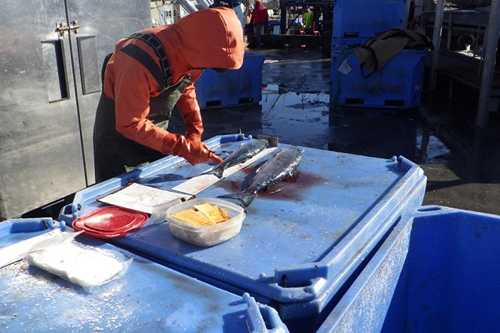
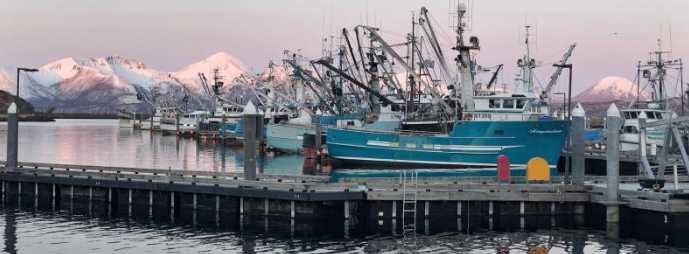
Scientists explored the effectiveness of shore-based observers in place of at-sea observers in a high-volume trawl fishery. They also developed a structured approach to evaluate shoreside monitoring programs in fisheries that lack at-sea human observers. NOAA Fisheries is required by law to monitor fishery catches to ensure sustainable management of U.S. fisheries. The Alaska pollock […]
Advancements in Artificial Intelligence forms such as computer vision, machine learning, and deep learning assist with processing data. The model was highly accurate at detecting pollock and salmon. Scientists used a model to detect and classify fish in videos more quickly than humans. The detection model is called You Only Look Once, version 11 (or […]
The Alaska State Board of Fisheries this week will consider four proposals that would eliminate or reduce bycatch in the Prince William Sound “midwater” trawl fishery, which has zero observers and regularly bycatches bottom-dwelling species, potentially violating state law CORDOVA, ALASKA—The Alaska State Board of Fisheries is this week set to consider four proposals that […]
The pollock fishery in the Gulf of Alaska is unique in many ways. The pollock fishery in Alaska’s Bering Sea is rationalized, which means each vessel/permit holder is allocated a certain amount of catch for the season. But the Gulf of Alaska pollock fishery is open access, with every vessel racing against the others for catch. The […]