A University of Washington-led international team of astronomers has used data gathered by the Kepler Space Telescope to observe and confirm details of the outermost of seven exoplanets orbiting the star TRAPPIST-1. They confirmed that the planet, TRAPPIST-1h, orbits its star every 18.77 days, is linked in its orbital path to its siblings and is […]
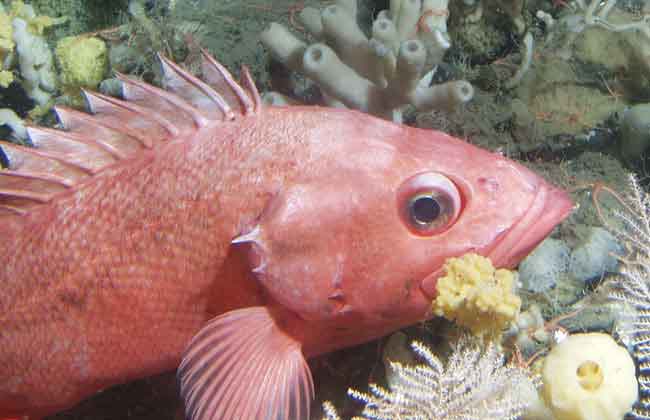
Some things just get better with age. Like rockfish mothers. A rockfish might not start spawning until she is 25 years old. As she gets older she produces more, and more robust, young. She continues to produce them over many years, into advanced age – which for some rockfish means 100 or 200 years. That […]
The combined power of three space observatories, including NASA’s Hubble Space Telescope, has helped astronomers uncover a moon orbiting the third largest dwarf planet, catalogued as 2007 OR10. The pair resides in the frigid outskirts of our solar system called the Kuiper Belt, a realm of icy debris left over from our solar system’s formation 4.6 billion years ago. […]
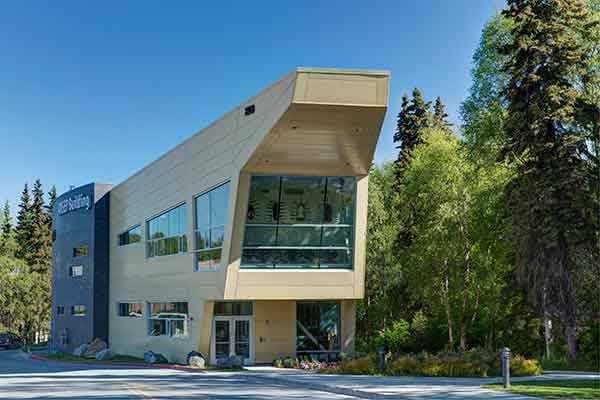
ANCHORAGE, ALASKA – The National Science Foundation has announced Alaska Native Science & Engineering Program as the recipient of a $3 million research grant through the Louis Stokes Alliance for Minority Participation program. Receiving $600,000 a year over the next five years, ANSEP will use the funding to conduct research aimed at better understanding the […]