• Search in Site

Search in Site

Alaska Native News

  • HOME
  • Featured
  • General
  • World
  • National
  • State
  • Rural
  • Arctic
  • Science/Education
  • Health
  • At Sea
  • Politics
  • Weather
  • Tides
  • Entertainment
    • Daily Crossword/Sudoku
    • Comics
  • Opinions/Op/Ed/Letters
    • Op/Ed and the Editor
    • Submit Press Release, OP/ED or Letter to the Editor
  • Advertising
  • Contact Us
  • North Slope/Northwest Alaska
  • Interior Alaska
  • Southwest Alaska
  • Southcentral
  • Southeast Alaska
  • This Day in Alaskan and U.S. History
  1. Home
  2. /
  3. Alutiiq Word of the...
  4. /

By Amy Steffian | Alutiiq Museum on Mar 29, 2020Comments Off on


NUNA A’ULALUNI – EARTHQUAKEAWOTW2240
NUNA AULAKAN ALINGNARTUQ. – IT IS SCARY WHEN THE LAND SHAKES.

The Kodiak Archipelago lies at the juncture of two major tectonic plates, enormous pieces of the earth’s crust that are continually colliding. Here rock formed on the ocean floor is scraped off the Pacific plate as it slides beneath the more stationary North American Plate. As the Pacific plate adjusts to this pressure, sections occasionally slip, creating earthquakes.

Alutiiq legends provide several explanations for earthquakes. Some say that invisible men who lived inside the earth created quakes and made volcanoes steam and smoke when they fought, cooked meals, or heated a steam bath. Others suggest that earthquakes are caused by a powerful shaman grieving the loss of his son, and some believed that they were the result of a mythical being giving birth: the favorite animal of the Alutiiq supreme being Llam Sua.

Whatever their source, earthquakes have repeatedly shaped the lives of Alutiiq people. The Great Alaska Earthquake of 1964, one of the largest in recorded history, created a tsunami that leveled the communities of Kaguyak and Old Harbor, forced residents to vacate Afognak village, and generated dramatic changes in the distribution and availability of subsistence resources. Geologists believe that quakes of this size happen every four to five hundred years—more than fifteen times in the past 7,500 years of Kodiak’s human history.

See also  Raspberry-Alutiiq Word of the Week

Source: Alutiiq Museum

[content id=”79272″]

  alutiiq, earthquake, Kodiak, museum, word of the week

added by Amy Steffian | Alutiiq Museum on Mar 29, 2020
View all posts by Amy Steffian | Alutiiq Museum →

Related Posts:

  • DECADE’s Taryn Lopez (University of Alaska Fairbanks, USA) collects gas samples at Kanaga volcano in the Western Aleutian Islands. Credit: Tobias Fischer, University of New Mexico, USA.
    Exhaling Earth: Scientists Closer to Forecasting…
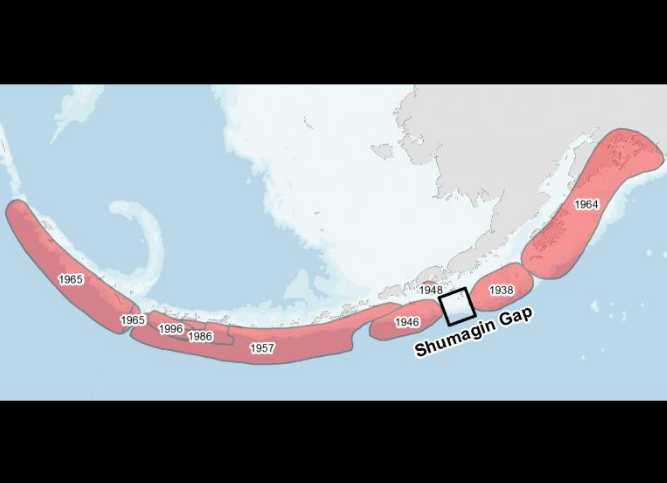
  • Map shows the location of the Shumagin gap., location of the 2020 Simeonof and 2021 Chignik earthquakes. Map courtesy of the Alaska Earthquake Center
    Major 2020 Alaska Quake Triggered Neighboring 2021 Temblor
  • Google Earth image This map shows the locations of the three components of the Aug. 20, 2025, magnitude 4.2 earthquake in central Alaska, as determined by the Alaska Earthquake Center. Research found that a very-low-frequency earthquake occurred moments before the main shock earthquake.
    Unusual seismic signal detected in 2025 central…
  • logo mask500 (1)
    An Earthquake in a Maze
  • logo mask500 (1)
    Study of Chilean Quake Shows Potential for Future Earthquake
  • logo mask500 (1)
    Geoscientists Use Numerical Model to Better Forecast…
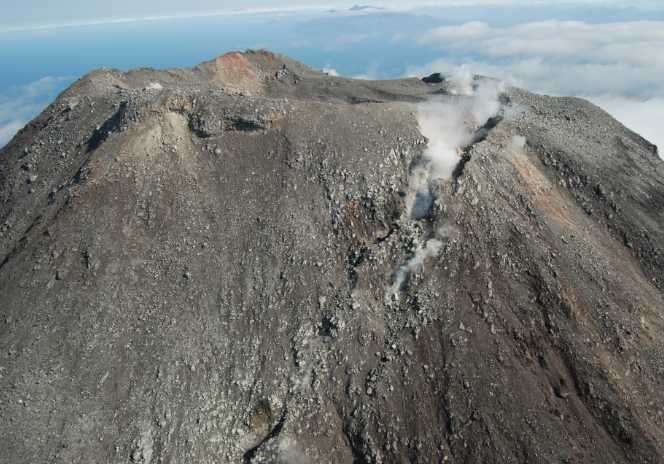
  • Degassing is visible from a summit fracture on Kanaga Volcano in September 2015. Photo by Taryn Lopez
    Research reveals sources of CO2 from Aleutian-Alaska…
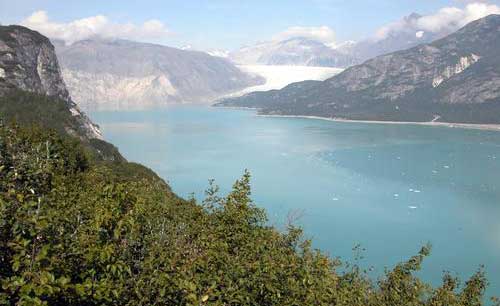
  • Muir Glacier has retreated out of view in this image taken in 2004. Note the horizontal line on the landscape at the headwaters. That is the thickness of the glacier in the past. Image- Bruce Molnia | USGS
    Retreating Glaciers Spur Alaskan Earthquakes


  • Advertise with Us
  • Submit Press Release, OP/ED or Letter to the Editor
  • Contact Alaska Native News
  • DMCA
  • Privacy Policy
© 2026, ↑ Alaska Native News